

What's Happening?
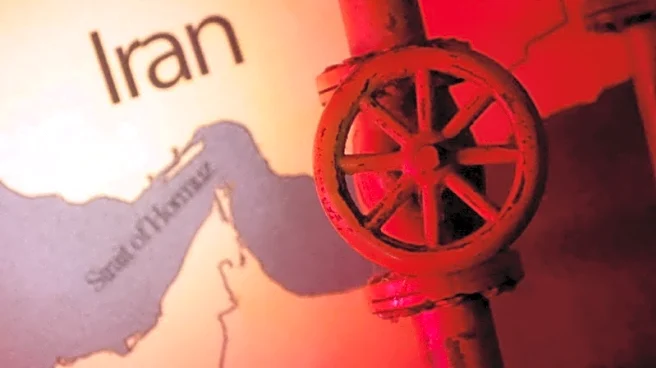
Iranian crude oil exports have continued through the Strait of Hormuz despite recent military actions by Israel and the U.S. against Iran. According to TankerTrackers.com, Iran has exported approximately 13.7 million barrels of crude oil since the attacks
began on February 28. Vessel tracking service Kpler reports even higher figures, estimating 16.5 million barrels exported in the first 11 days of March. The ongoing conflict has significantly disrupted oil exports from other Gulf countries, yet Iran's exports remain largely unaffected. This situation contrasts with past U.S. actions in Venezuela, where a naval blockade was implemented. Analysts suggest that U.S. efforts to intercept Iran-linked tankers could provoke further attacks on vessels in the Strait of Hormuz.
Why It's Important?
The continuation of Iranian oil exports through the Strait of Hormuz is significant due to the strategic importance of this waterway, which is a critical passage for global oil shipments. The ability of Iran to maintain its export levels amidst regional tensions highlights the resilience of its oil industry and the potential for further geopolitical instability. This situation poses challenges for U.S. foreign policy and energy markets, as any disruption in the Strait could lead to significant fluctuations in global oil prices. The ongoing conflict and Iran's strategic maneuvers could impact international relations and energy security, particularly for countries reliant on Middle Eastern oil.
What's Next?
The situation in the Strait of Hormuz remains volatile, with potential for further military escalations. The U.S. may consider additional measures to curb Iranian oil exports, which could lead to increased tensions and further disruptions in the region. The international community will likely monitor the situation closely, as any closure of the Strait could have severe implications for global oil supply and prices. Stakeholders, including oil-importing nations and multinational corporations, will need to assess their strategies in response to these developments.