




What's Happening?
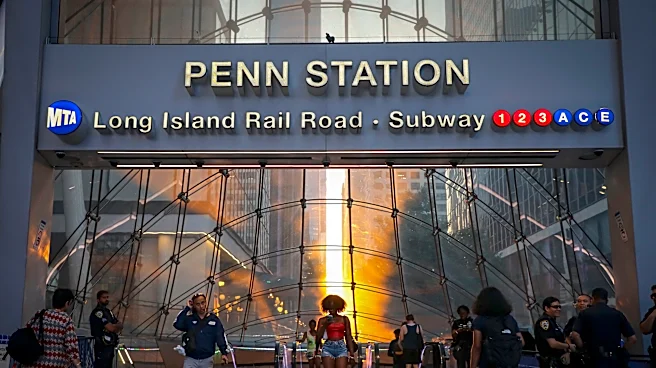
Senate Minority Leader Chuck Schumer has announced his intention to block any legislative efforts to rename New York City's Penn Station after President Donald Trump. This decision comes in response to a proposal from Trump's Transportation Secretary,
Sean Duffy, who suggested using federal funds to rename the station. Schumer has declared that any transportation bill containing such a renaming proposal is 'dead in the United States Senate' and will not proceed. The proposal is part of a broader initiative by the Trump administration to direct Amtrak to rename the station, which is the busiest rail hub in the nation and is currently undergoing a $7 billion to $8 billion renovation plan. The federal Department of Transportation took over the renovation efforts in April 2025, amid tensions between the Trump administration and New York State over congestion pricing.
Why It's Important?
The opposition from Schumer highlights the political tensions surrounding infrastructure projects and federal funding allocations. Renaming Penn Station after President Trump could be seen as a symbolic victory for the administration, but it faces significant resistance from Democratic leaders. The decision to block the renaming could impact the allocation of federal funds for the ongoing renovation of Penn Station, potentially delaying improvements to a critical transportation hub. This situation underscores the broader political dynamics at play in infrastructure funding and the influence of federal and state relationships on local projects.
What's Next?
The standoff between Schumer and the Trump administration suggests that any transportation bill including the renaming proposal will face significant hurdles in the Senate. The ongoing renovation of Penn Station will continue under the current name unless a compromise is reached. Stakeholders, including Amtrak and local government officials, may need to navigate these political challenges to secure necessary funding and ensure the project's completion. The outcome of this dispute could set a precedent for future infrastructure projects and the role of federal influence in local naming rights.