






What's Happening?
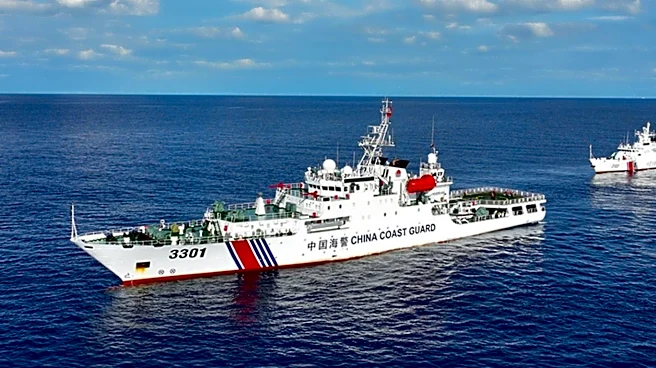
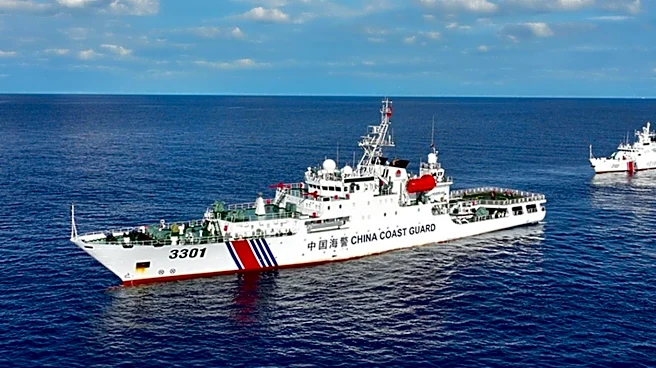
A recent report from the Center for Strategic and International Studies (CSIS) indicates that Chinese research vessels are spending significantly more time near critical undersea infrastructure compared to vessels from 47 other countries. This increased
presence has raised concerns among experts who suggest that Beijing may be aiming to disrupt communication networks, particularly around Taiwan, during a potential contingency. Such actions could isolate the island by severing both civilian contact and supply chains. The report also highlights the potential for disruption to Japanese society and delays in communication between Japan and the U.S. if Pacific undersea cables are damaged. Undersea cables are essential for global internet connectivity, and their damage could severely impact internet access and international financial transactions.
Why It's Important?
The findings from the CSIS report underscore a significant national security concern for the U.S. and its allies in the Indo-Pacific region. The potential for China to target undersea communication cables represents a critical vulnerability that could have far-reaching economic and strategic consequences. Disruption of these cables would not only impact internet access but also cripple international financial transactions, affecting global markets and supply chains. For the U.S., this threat necessitates a re-evaluation of its infrastructure protection strategies and a strengthening of alliances with countries like Japan and South Korea to enhance surveillance and defense capabilities against such 'gray-zone' threats. The report suggests that segments of trans-Pacific cables near the First Island Chain are particularly vulnerable, making their protection a priority for regional stability and U.S. interests.
What's Next?
In response to these concerns, the British think tank 'China Strategic Risk Institute' has urged the U.S. Congress to bolster alliance capabilities to counter Chinese gray-zone threats. This includes upgrading surveillance systems in collaboration with Japan, South Korea, and other regional partners. The international community may need to address the fragmented responses to the United Nations Convention on the Law of the Sea (UNCLOS), which prohibits intentional damage to undersea cables but lacks robust enforcement mechanisms. Further diplomatic efforts and technological advancements in undersea cable protection and monitoring are likely to be pursued. The U.S. and its allies will likely increase intelligence sharing and joint exercises to deter potential attacks and enhance their ability to respond to such disruptions.
Beyond the Headlines
The implications of China's increased activity near undersea infrastructure extend beyond immediate military or economic concerns. It highlights a broader strategic competition for control over critical global infrastructure. The development of capabilities to attack undersea cables using robots and unmanned submarines, as noted by the 'China Strategic Risk Institute,' signifies a new dimension of warfare that blurs the lines between conventional and unconventional threats. This situation also brings to the forefront ethical and legal dilemmas regarding the protection of shared global resources and the enforcement of international maritime law in an era of advanced technological capabilities. The long-term shift could involve a more militarized approach to safeguarding undersea networks, potentially leading to increased tensions in strategic maritime corridors.