






What's Happening?
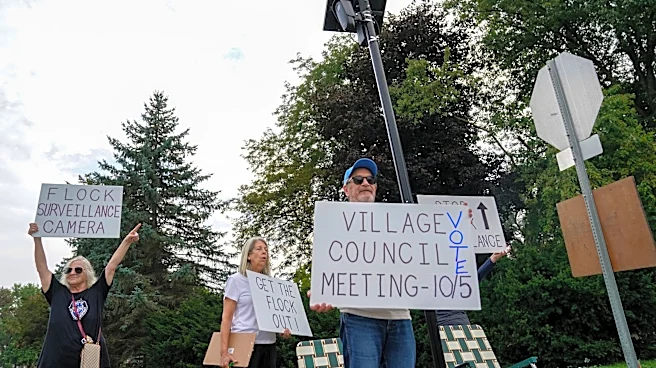
The Rochester Police Department in Massachusetts has announced a 30-day suspension of its Flock cameras, effective Tuesday. This decision comes after significant community concerns were raised during a recent Select Board meeting regarding privacy and
data sharing practices associated with the cameras. Rochester Police Chief Michael A. Assad Jr. stated that during this pause, the department will conduct a comprehensive review of the program to assess how information is stored and shared. While acknowledging the cameras' utility in solving investigations, locating individuals in danger, and identifying suspects, the department is addressing public apprehension about surveillance and potential misuse of data.
Why It's Important?
This suspension is important as it reflects a growing national debate over the balance between public safety and individual privacy rights, particularly concerning surveillance technologies like Flock cameras. The community's concerns in Rochester mirror those expressed in over 25 other Massachusetts municipalities that have recently ended, suspended, or declined to renew contracts with Flock Safety. This trend indicates a broader public demand for greater transparency and accountability from law enforcement regarding data collection and usage. The outcome of Rochester's review could set a precedent for how other communities address similar privacy concerns, potentially influencing future policies on surveillance technology adoption and oversight across the state and beyond.
What's Next?
During the 30-day suspension, the Rochester Police Department will thoroughly review its Flock camera program, focusing on data storage, sharing protocols, and privacy implications. This review will likely involve engaging with community members, privacy advocates, and legal experts to address the raised concerns comprehensively. Following the review, the department will need to decide whether to reinstate the cameras, implement new policies and safeguards, or discontinue their use. Potential outcomes include the adoption of stricter data retention policies, enhanced transparency measures, or even a permanent cessation of the program if community concerns cannot be adequately resolved. The decision will significantly impact public trust and future technology adoption by the department.
Beyond the Headlines
The Rochester Flock camera suspension delves into the complex ethical and legal dimensions of modern policing. While law enforcement agencies often highlight the effectiveness of such technologies in crime prevention and resolution, the underlying concerns about mass surveillance, potential for misuse, and the erosion of civil liberties are profound. This situation prompts a deeper discussion about the 'smart city' concept and the extent to which technology should be integrated into public spaces without robust oversight and community consent. It also raises questions about the long-term societal impact of pervasive surveillance, including its potential to disproportionately affect certain communities and chill free expression. The outcome in Rochester could contribute to the evolving legal framework surrounding data privacy and government surveillance in the United States.