
What's Happening?
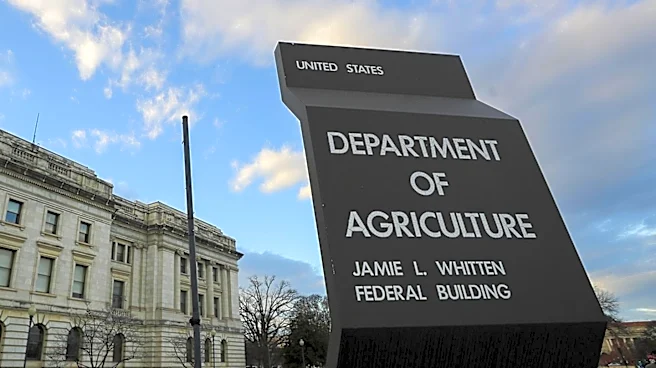
The United States Department of Agriculture (USDA) has officially opened the sign-up period for its 2026 farm programs. This year's enrollment period is notably later than usual, a change that an agricultural
economist suggests provides farmers with a clearer picture for making informed decisions. Bart Fischer, an ag economist at Texas A&M University, highlighted that the later sign-up allows farmers to have a much better sense of potential yield, which is a crucial factor for programs like the Agriculture Risk Coverage (ARC) program. While some uncertainties remain, particularly regarding future price movements that influence ARC and Price Loss Coverage (PLC) programs, farmers are encouraged to utilize online decision tools, including one provided by Texas A&M, to evaluate the best options for their operations. The extended sign-up period, which runs through December 11, is a result of the USDA implementing changes to the programs, including the addition of 30 million base acres.
Why It's Important?
The opening of the 2026 USDA farm program signup is significant for U.S. agricultural producers as it directly impacts their financial stability and risk management strategies. The timing of the enrollment, now later in the year, offers a distinct advantage by providing more concrete yield data, enabling farmers to make more accurate projections and select programs that best suit their anticipated harvest and market conditions. This enhanced data-driven decision-making can lead to more effective risk mitigation against price fluctuations and yield losses, which are inherent challenges in agriculture. The addition of 30 million base acres also signals a broader adjustment in agricultural policy, potentially expanding eligibility or altering benefit structures for a wider range of farming operations. For the broader U.S. economy, stable agricultural production supported by these programs contributes to food security and can help buffer against inflationary pressures on food prices. The availability of online tools further democratizes access to complex program information, empowering individual farmers to optimize their participation and, in turn, strengthen the agricultural sector.
What's Next?
Farmers have until December 11 to sign up for the 2026 USDA farm programs. This period will overlap with the commencement of the 2027 farm program sign-up, which is scheduled to begin in early November. During this time, farmers are expected to continue evaluating their options using available decision tools to determine the most beneficial programs for their specific circumstances. The USDA will likely continue to provide guidance and support to help producers navigate the program changes and enrollment process. The impact of the added 30 million base acres will unfold as more farmers enroll, potentially leading to shifts in program participation rates and overall agricultural land use. Policy discussions surrounding future farm bills and program adjustments are also anticipated, especially given the ongoing need to adapt to evolving agricultural landscapes and economic conditions.
Beyond the Headlines
The shift in the USDA farm program signup timeline reflects a broader trend towards data-informed agricultural policy and risk management. By aligning the enrollment period with a clearer understanding of yield, the USDA is implicitly acknowledging the importance of real-time data in agricultural decision-making. This could pave the way for more dynamic and responsive farm programs in the future, potentially incorporating more advanced analytics and predictive modeling. Furthermore, the emphasis on online decision tools highlights the increasing digitalization of agriculture, which can empower farmers with greater autonomy and efficiency. However, it also raises questions about digital access and literacy among all farmers, ensuring that those in less connected or technologically proficient areas are not left at a disadvantage. The ongoing adjustments to base acres and program structures also underscore the continuous effort to balance agricultural productivity with environmental stewardship and economic sustainability in the U.S.