






What's Happening?
NASA is reportedly working with Axiom Space to simplify the design of the Axiom Extravehicular Mobility Unit (AxEMU) lunar spacesuit for the initial Artemis lunar surface missions. This streamlined version, internally referred to as the 'sortie suit,'
aims to reduce the suit's mass, complexity, and requirements for extended duration. The original AxEMU design included capabilities for up to six extravehicular activities during a 6.5-day surface mission and the ability to remain dormant for 210 days while still supporting additional EVAs. It also accounted for operations in permanently shadowed regions near the lunar south pole, where temperatures are extremely low. The reported simplification focuses on the immediate needs for early lunar landings, rather than incorporating all long-term operational requirements from the outset. This adjustment comes as NASA faces schedule pressures to ensure the spacesuit is ready for the planned 2028 lunar landing.
Why It's Important?
The simplification of the AxEMU spacesuit is a critical development for NASA's Artemis program, which aims to return astronauts to the Moon. Spacesuits are as vital as the spacecraft themselves, providing life support, mobility, and protection in the harsh lunar environment. By reducing complexity, NASA and Axiom Space can potentially accelerate the development, testing, and qualification process, addressing concerns raised by the Office of Inspector General about tight schedules. This strategic decision could mitigate risks associated with hardware development and integration, ensuring that a flight-ready spacesuit is available for the first lunar landing. The move also reflects a broader engineering approach within Artemis to prioritize immediate mission objectives while allowing more advanced capabilities to evolve for future, more complex lunar operations. Without a functional spacesuit, astronauts cannot perform the scientific and exploratory tasks central to the Artemis mission, making the AxEMU's timely readiness paramount.
What's Next?
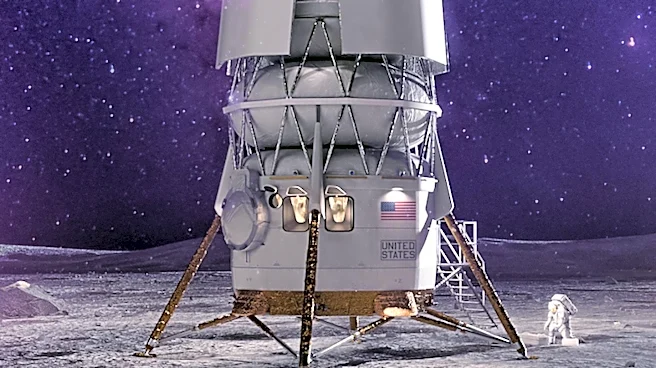
The first Artemis lunar landing is targeted for early 2028. Before this, Artemis 3 is planned as a crewed demonstration mission in low Earth orbit in 2027. This mission will test rendezvous and docking operations between the Orion spacecraft and commercial lunar lander hardware. NASA is also evaluating options to test the interfaces between the AxEMU and the landers during this Earth orbit mission, which would allow for problem-solving in a less critical environment. Axiom Space has already conducted extensive testing, including over 700 hours of pressurized human testing and dual-suit runs in NASA’s Neutral Buoyancy Laboratory. The company will continue to evolve the suit's capabilities to meet the demands of longer surface stays and more challenging lunar environments as the Artemis program progresses beyond the initial landings. The success of the 'sortie suit' approach will determine the pace and scope of future lunar exploration.
Beyond the Headlines
The decision to simplify the AxEMU spacesuit highlights the inherent challenges and trade-offs in complex space exploration programs. While the initial requirements for the AxEMU were ambitious, aiming for a highly versatile suit capable of supporting diverse and extended lunar operations, the reality of development timelines and technical hurdles necessitates a more pragmatic approach. This iterative development strategy, where essential capabilities are prioritized for early missions and advanced features are integrated later, is common in aerospace engineering. It underscores the ethical responsibility of ensuring astronaut safety while balancing the scientific and exploratory goals with engineering feasibility and schedule constraints. The long-term implication is that future lunar missions will likely see increasingly sophisticated spacesuits as technology matures and operational experience grows, ultimately enabling sustained human presence and more ambitious scientific endeavors on the Moon.