
What's Happening?
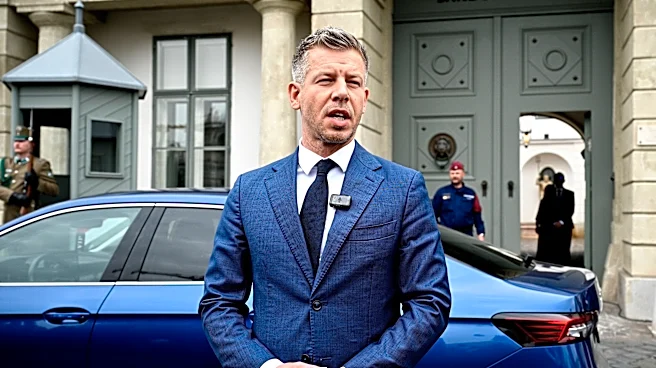
The European Commission is actively engaging with Hungary's incoming Prime Minister Péter Magyar to unfreeze €17 billion in EU funds that have been frozen due to concerns over corruption and rule-of-law
issues during Viktor Orbán's tenure. Magyar's Tisza party has recently increased its parliamentary majority, which strengthens his mandate to implement necessary democratic reforms. These reforms are crucial for Hungary to meet 27 EU-mandated conditions, known as 'super milestones', which include changes to procurement rules, judicial independence, and academic freedom. Over the weekend, Magyar and his future ministers held discussions with European Commission President Ursula von der Leyen’s chief of staff and other officials to outline a roadmap for releasing the funds and to discuss a €90 billion loan to Ukraine that was previously vetoed by Orbán.
Why It's Important?
The unfreezing of EU funds is significant for Hungary's economic recovery and its relationship with the European Union. The funds are part of the EU's post-Covid recovery package, and their release is contingent upon Hungary's compliance with EU standards on governance and rule of law. This development could lead to increased judicial independence and academic freedom in Hungary, aligning the country more closely with EU values. Additionally, the discussions around the €90 billion loan to Ukraine highlight Hungary's role in broader EU financial decisions, potentially impacting EU-Ukraine relations and regional stability.
What's Next?
If Hungary successfully implements the required reforms, it could see the release of the frozen funds, boosting its economy and strengthening its ties with the EU. The Commission has indicated that the first EU loan payment to Kyiv could be released by the end of May, contingent on Magyar lifting the veto. This could lead to further diplomatic engagements between Hungary and the EU, as well as potential shifts in Hungary's domestic policies to align with EU standards.
Beyond the Headlines
The situation underscores the EU's leverage in promoting democratic reforms within member states through financial incentives. Hungary's compliance with EU conditions could serve as a precedent for other countries facing similar issues. The engagement also reflects the EU's strategic interest in maintaining stability and promoting democratic values in Eastern Europe, particularly in the context of geopolitical tensions involving Ukraine.