








What's Happening?
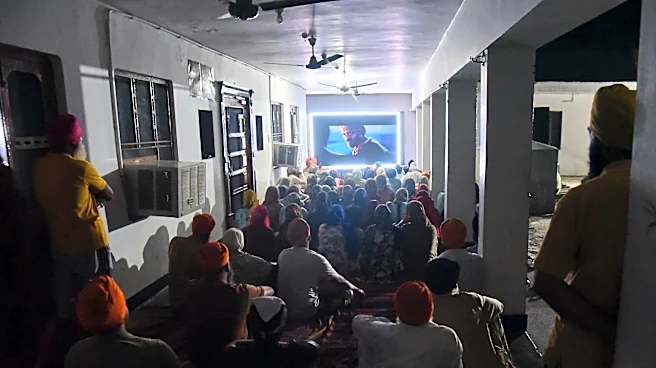
In Gurdaspur, India, community screenings of the film 'Satluj' are taking place after the movie was blocked by Indian officials. 'Satluj' depicts the story of human rights activist Jaswant Singh Khalra, who investigated disappearances and extrajudicial
killings during the Punjab insurgency in the 1980s and 1990s. The film, originally titled 'Punjab 95', faced censorship with demands for over 120 cuts, leading to its removal from the ZEE5 streaming platform in India. In response, Sikh organizations and local activists have organized screenings in Sikh temples and village halls, turning these spaces into makeshift cinemas. These screenings allow audiences to engage with a retelling of one of India's bloodiest internal conflicts, highlighting the experiences of those who lived through the insurgency.
Why It's Important?
The screenings of 'Satluj' have reignited discussions on artistic freedom and censorship in India, particularly under Prime Minister Narendra Modi's government. Critics argue that censorship has increased, with films often facing restrictions if they do not align with the government's nationalist narrative. The film's removal has sparked a debate on the right to access historical narratives and the role of cinema in preserving cultural memory. For many in Punjab, the film provides a platform to revisit and reflect on a painful chapter in their history, offering younger generations insight into the experiences of their elders. This grassroots movement underscores the power of community action in challenging censorship and preserving historical truth.
What's Next?
The future of 'Satluj' remains uncertain as ZEE5 explores legal avenues to restore the film's availability in India. Meanwhile, community screenings are likely to continue, driven by local demand and the desire to keep the conversation about Punjab's history alive. The ongoing debate over censorship may prompt further scrutiny of India's film certification process and its impact on artistic expression. As the film circulates informally, it may inspire similar grassroots initiatives, challenging the boundaries of state-imposed restrictions and advocating for greater freedom of expression in the arts.
Beyond the Headlines
The controversy surrounding 'Satluj' highlights broader issues of historical narrative control and the role of media in shaping public memory. The film's depiction of the Punjab insurgency challenges official narratives and brings to light stories that have been marginalized. This situation raises questions about the balance between national security concerns and the public's right to access diverse perspectives on historical events. The grassroots screenings also reflect a cultural resilience, as communities take ownership of their history and assert their right to remember and discuss past injustices.