
What's Happening?
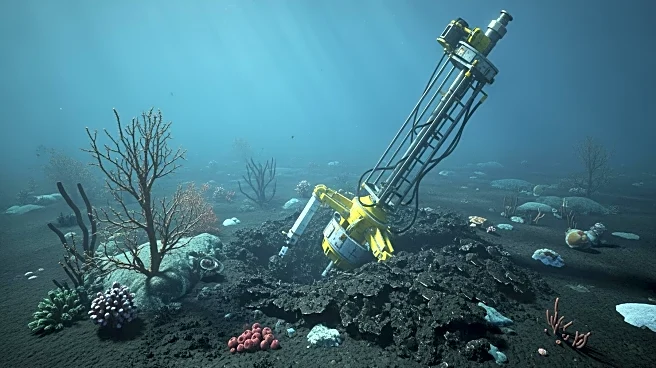
A recent study published in Nature Ecology & Evolution has highlighted the significant ecological impacts of experimental deep-sea mining on marine biodiversity. The study focused on a large-scale industrial
test conducted in 2022 in the Clarion-Clipperton Zone (CCZ) of the eastern Pacific Ocean. This test involved the use of a prototype commercial deep-sea mining machine, which extracted over 3,000 tons of polymetallic nodules from the seafloor. The research employed an asymmetrical Before-After-Control-Impact (BACI) experimental design to assess the effects of mining on macrofaunal abundance and diversity. The findings revealed a 37% decrease in macrofaunal densities within the mining track, alongside a 32% reduction in species richness. The study also noted increased ecological variability and altered community dynamics in the affected areas.
Why It's Important?
The findings of this study are crucial as they provide quantitative data on the immediate impacts of deep-sea mining on marine ecosystems. The significant reduction in macrofaunal density and species richness within the mining tracks underscores the potential risks associated with commercial exploitation of deep-sea resources. This research highlights the need for comprehensive baseline data to distinguish mining impacts from natural variability. The study's results could influence future regulatory frameworks and environmental management strategies for deep-sea mining, emphasizing the importance of protecting marine biodiversity. Stakeholders, including environmental organizations and policymakers, may use this data to advocate for stricter regulations and more sustainable practices in the deep-sea mining industry.
What's Next?
The study suggests the necessity for ongoing monitoring and research to better understand the long-term impacts of deep-sea mining. Future steps may include the development of more stringent environmental guidelines and the implementation of protective measures to mitigate biodiversity loss. The International Seabed Authority (ISA) and other regulatory bodies might consider revising exploration and exploitation regulations based on these findings. Additionally, there could be increased pressure from environmental groups to halt or limit deep-sea mining activities until more is known about their ecological consequences.
Beyond the Headlines
This study raises ethical and environmental concerns about the sustainability of deep-sea mining. The potential for irreversible damage to unique marine ecosystems calls for a reevaluation of the economic benefits versus environmental costs. The research also highlights the importance of international cooperation in managing and protecting the deep-sea environment, as these ecosystems are beyond national jurisdictions. The findings could lead to a broader discussion on the need for global policies that balance resource extraction with conservation efforts.