



What's Happening?
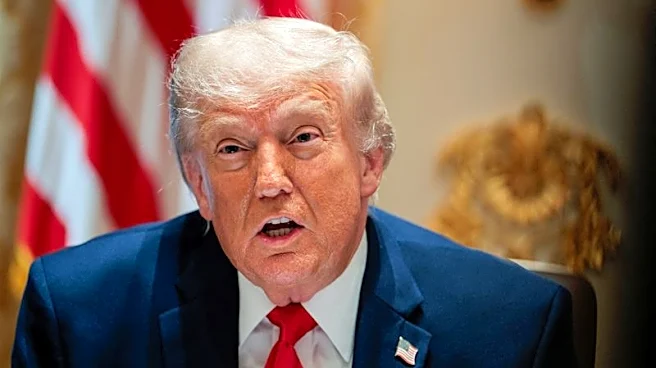
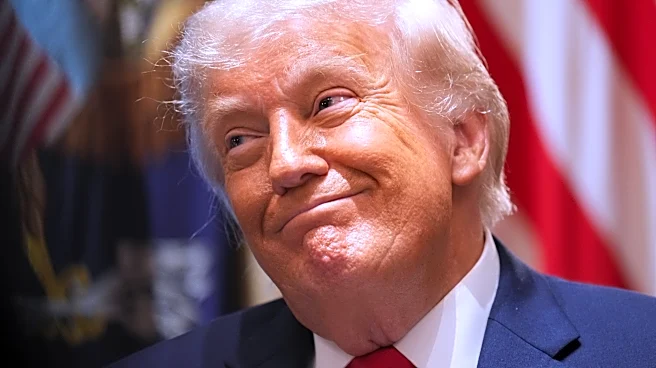
A federal judge has decided not to block President Trump's executive order that aims to restrict voting by mail. U.S. District Judge Carl Nichols, appointed by President Trump, issued the ruling, allowing the order to remain in effect for the time being.
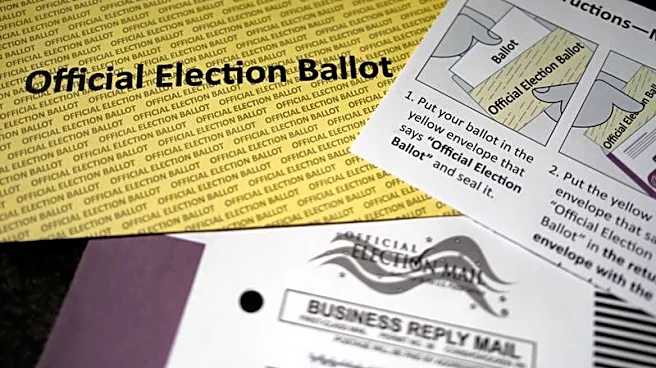
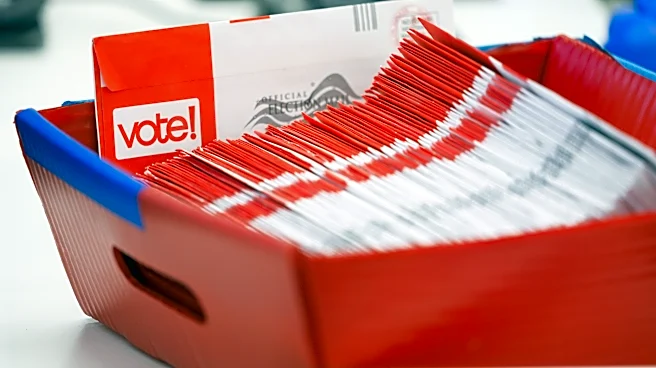
The executive order, released on March 31, directs the Department of Homeland Security to work with the Social Security Administration to compile lists of adult U.S. citizens in each state and provide these lists to state election officials. Additionally, it mandates the U.S. Postal Service to create lists of eligible voters and only deliver mail-in ballots to those individuals. Judge Nichols found it premature to issue an emergency ruling to halt key aspects of the order, as those directives have not yet been implemented. This decision comes as another federal judge is set to issue a ruling in a similar set of lawsuits based in Boston, expected as early as June.
Why It's Important?
The decision to allow President Trump's executive order on mail-in voting to stand has significant implications for the upcoming elections and the broader debate over voting rights in the United States. Proponents of the order argue that it is necessary to prevent voter fraud and ensure the integrity of elections. However, critics contend that it could lead to voter suppression, particularly among minority and low-income communities who may rely more heavily on mail-in voting. The ruling underscores the ongoing legal and political battles over voting access and election security, which have become increasingly contentious in recent years. The outcome of these legal challenges could shape the future of voting rights and election administration in the U.S., affecting millions of voters and the democratic process itself.
What's Next?
As the legal challenges to President Trump's mail-in voting order continue, attention will turn to the upcoming ruling from a federal judge in Boston, which could provide further clarity on the order's future. Additionally, state election officials and advocacy groups are likely to continue their efforts to challenge the order in court, arguing that it could disenfranchise voters. The Department of Homeland Security and the Social Security Administration will need to prepare for the potential implementation of the order's directives, while the U.S. Postal Service faces the task of managing mail-in ballot distribution under the new guidelines. The political ramifications of these developments will likely play a significant role in the discourse leading up to the next election cycle.