





What's Happening?
A new study by Christoforos Kotsakis, a professor of geodesy at the Aristotle University of Thessaloniki in Greece, indicates that the solid Earth is gradually becoming rounder, with the rate of change accelerating. The research, published on September
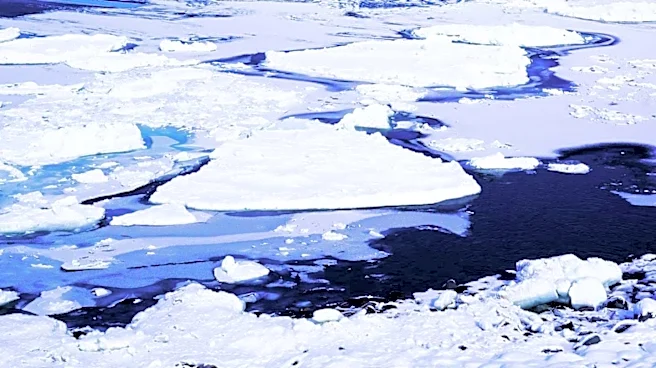
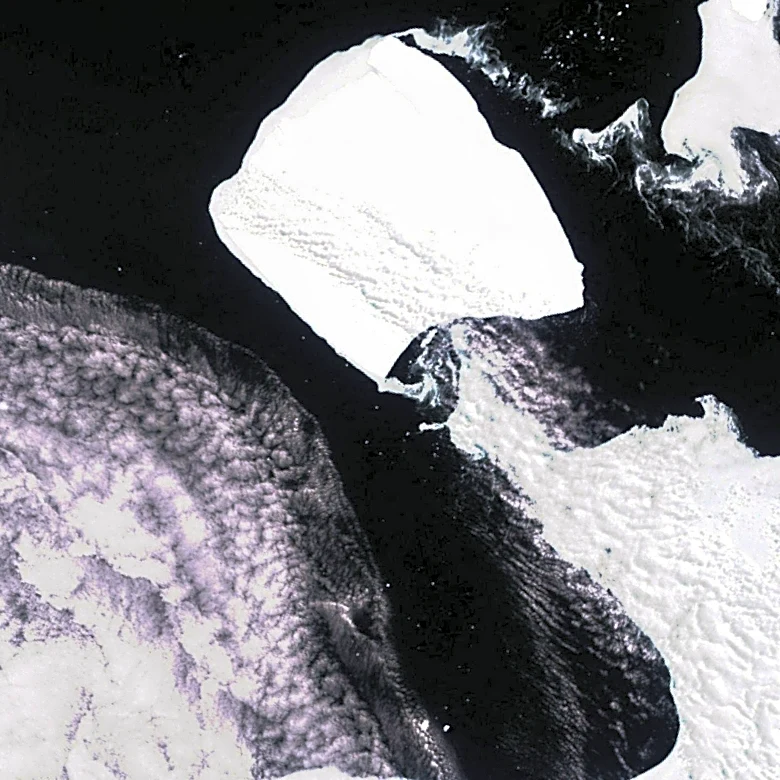
9 in the journal JGR Solid Earth, reveals that between 2011 and 2015, the Earth's poles rose and the equatorial bulge shrank by approximately one millimeter per year. This rate is double that observed between 1997 and 2000, when the rounding occurred at about 0.5 millimeter per year. Kotsakis developed a novel method for analyzing data from global navigation satellite systems (GNSS) to track these subtle deformations of the Earth's surface. While the changes are minuscule in comparison to the planet's overall size, they reflect significant ongoing planetary upheavals. The primary driver for this phenomenon is identified as the melting of polar ice sheets, which reduces pressure on the Earth's crust, allowing it to rise, while the equator experiences increased mass and a slight flattening.
Why It's Important?
This discovery holds significant implications for understanding the Earth's dynamic processes and the broader effects of climate change. The observed changes in the Earth's shape provide a new, measurable indicator of planetary shifts, offering a complementary tool to existing climate monitoring methods. The acceleration of the rounding process suggests that the impacts of phenomena like polar ice melt are intensifying, leading to more rapid geological responses. This research could refine climate models by providing more precise data on how mass redistribution, particularly from melting ice, affects the planet's physical form. Furthermore, the study highlights the complexity of Earth's systems, demonstrating that whether the planet is perceived as 'rounder' or 'flatter' depends on whether oceans are included in the measurement, as water accumulation towards the equator causes the planet to become more flattened overall. This distinction is crucial for accurate scientific interpretation and policy-making related to environmental changes.
What's Next?
The findings suggest that these shape changes could evolve into a valuable metric for assessing the planet's response to human activities. Future research will likely focus on integrating these new measurements with existing data, such as those from Earth's gravitational field, to enhance the accuracy of climate change tracking. The study noted a slight discrepancy between shape changes and gravitational field shifts, indicating that these processes are not perfectly synchronized. Further investigation into this gap could lead to a more comprehensive understanding of Earth's internal and external dynamics. Scientists may also explore how these subtle deformations correlate with other climate indicators, potentially leading to improved predictive models for ice loss in regions like Greenland and Antarctica, and shifts in ocean water masses. The development of more sophisticated GNSS analysis techniques and broader data collection could further refine these measurements and provide a clearer picture of the Earth's ongoing transformation.
Beyond the Headlines
The study's revelation that the solid Earth is becoming rounder at an accelerating pace underscores the profound and often imperceptible ways human activities are reshaping our planet. Beyond the immediate scientific implications, this research highlights the interconnectedness of Earth's systems, where changes in one component, such as ice sheets, trigger cascading effects across the entire globe. The distinction between measuring the solid Earth versus including the oceans also brings to light the complexities of defining and quantifying global change, emphasizing the need for precise scientific language and comprehensive data. This work could inspire new approaches to environmental monitoring, moving beyond traditional metrics to incorporate subtle geodetic shifts as critical indicators of planetary health. It also serves as a powerful reminder that even seemingly minor geological alterations can signify significant underlying environmental pressures, urging a deeper consideration of long-term ecological and geophysical consequences.