



What's Happening?
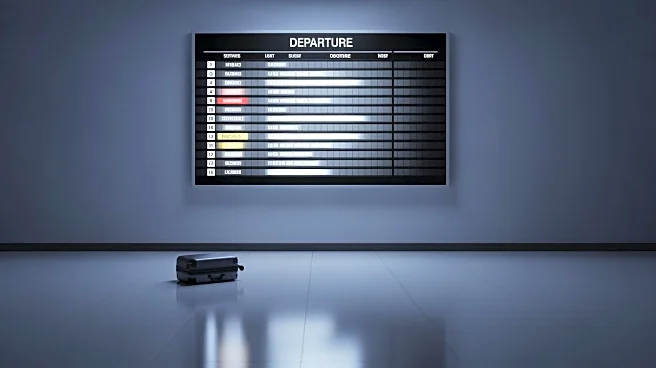
Ryanair is under scrutiny after a flight from Bristol to Dublin was diverted to Manchester due to Storm Amy, leaving passengers stranded. The flight, which took place in October last year, attempted to land in Dublin twice before being redirected. Passengers
were left on the plane for six hours without refreshments and were eventually forced to find their own accommodations as no Ryanair staff were present to assist. The airline initially refused to refund the ticket or cover the costs incurred by passengers, claiming the flight had landed in Dublin. After media intervention, Ryanair acknowledged the error and agreed to refund the flight cost and cover hotel and transport expenses.
Why It's Important?
This incident highlights significant issues in airline customer service and accountability, particularly in handling unexpected disruptions. Ryanair's initial refusal to acknowledge the passengers' plight and the subsequent media involvement underscore the challenges consumers face in seeking redress from large corporations. The situation also raises questions about the reliability of airline communication systems and the transparency of their customer service processes. The broader impact on the airline industry includes potential regulatory scrutiny and a push for more robust consumer protection measures.
What's Next?
Ryanair's response to this incident may prompt further investigation by consumer rights organizations and regulatory bodies. The airline might face increased pressure to improve its customer service protocols and ensure better communication during flight disruptions. Additionally, this case could lead to a review of existing policies regarding passenger rights and compensation, potentially influencing future regulations in the airline industry.
Beyond the Headlines
The Ryanair incident reflects a growing consumer demand for accountability and transparency from service providers. It also highlights the power of media and public pressure in effecting change within large organizations. This case may encourage other passengers to voice their grievances and seek justice, potentially leading to a cultural shift in how airlines handle customer complaints and service failures.