






What's Happening?
Dr. Niranjan Dass, a pediatrician in Bakersfield, California, is raising concerns about declining vaccination rates and the spread of vaccine misinformation, which he attributes to the resurgence of measles in the United States. Measles, once largely
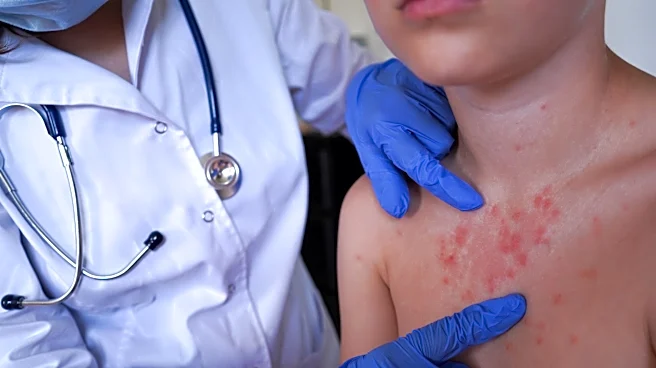
eliminated, is now becoming a significant concern for parents. Before the COVID-19 pandemic, high vaccination rates ensured herd immunity, making measles a rare issue. However, Dr. Dass notes that missed vaccinations during the pandemic, coupled with increased anti-vaccine messaging, have led to a drop in immunization rates. Herd immunity, which protects communities when vaccination rates exceed 90%, has diminished, leaving children vulnerable to measles. The disease is highly contagious and can spread before an infected person realizes they are sick, making outbreaks difficult to control. Dr. Dass emphasizes that measles is more serious than commonly perceived, potentially leading to severe complications such as pneumonia, brain damage (encephalitis), blindness, and intellectual delays. There is no specific treatment for measles; only supportive care can be provided as the illness runs its course. He points to online misinformation as a primary reason some families are choosing not to vaccinate their children.
Why It's Important?
The decline in childhood vaccination rates, particularly for measles, mumps, and rubella (MMR), poses a significant public health threat across the U.S. The re-emergence of measles, a disease once considered eliminated, highlights a critical vulnerability in community health infrastructure. The erosion of herd immunity means that not only unvaccinated individuals but also those who cannot be vaccinated (e.g., infants, immunocompromised individuals) are at increased risk. This situation can strain healthcare systems, as measles outbreaks require significant resources for containment and treatment of severe cases. The spread of misinformation online is undermining public trust in established medical science and public health recommendations, creating a challenging environment for disease prevention. The potential for severe complications from measles, including pneumonia, brain damage, and blindness, underscores the importance of maintaining high vaccination coverage to protect children and prevent long-term health consequences. The current trend could reverse decades of progress in controlling vaccine-preventable diseases, leading to higher morbidity and mortality rates among children.
What's Next?
To combat the resurgence of measles, Dr. Dass recommends that parents consult their pediatricians, the CDC, or the American Academy of Pediatrics for accurate information regarding vaccines. He stresses the importance of trusting established medical research and the decades-long success record of the measles vaccine. As measles cases continue to appear nationwide, the focus will likely be on encouraging parents to seek information from trusted medical sources to prevent further spread of the disease. Public health campaigns may intensify efforts to counter misinformation and promote vaccination. The medical community will continue to monitor vaccination rates and measles outbreaks, potentially leading to more localized interventions and educational initiatives. The goal is to restore herd immunity and protect vulnerable populations from a disease that should ideally be a relic of the past. The ongoing challenge will be to effectively communicate the safety and efficacy of vaccines amidst persistent anti-vaccine sentiment.
Beyond the Headlines
The resurgence of measles due to declining vaccination rates and misinformation reveals deeper societal challenges related to trust in institutions and the impact of digital information on public health. The ease with which misinformation spreads online highlights the need for robust digital literacy and critical thinking skills among the public. This situation also brings to light the ethical responsibility of individuals and communities to contribute to herd immunity, protecting those who cannot be vaccinated. The long-term implications could include a shift in public health strategies, with a greater emphasis on combating misinformation and engaging communities through trusted local voices. Furthermore, the economic burden of managing preventable outbreaks, including healthcare costs and potential disruptions to education and daily life, could become substantial. This trend may also prompt a re-evaluation of how public health authorities communicate scientific consensus and address vaccine hesitancy in an increasingly polarized information landscape.