



What's Happening?
The Congressional Budget Office (CBO) has released a report detailing the projected costs of the Trump administration's plan to build 15 Trump-class nuclear-powered battleships. The total estimated cost is approximately $275 billion through 2056, with
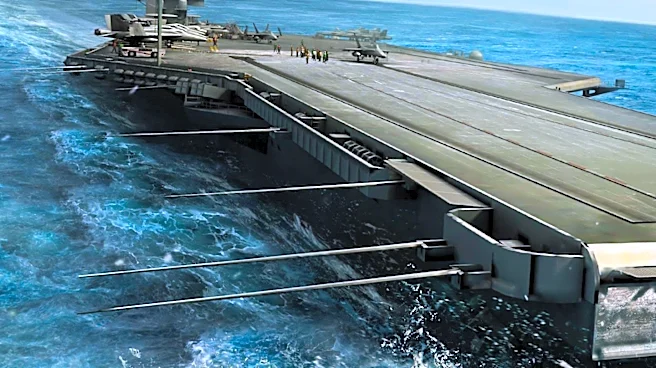
the first ship expected to cost $23.4 billion and each subsequent ship around $18 billion. This represents a significant increase from previous estimates, which were based on conventionally powered ships. The report highlights potential challenges for U.S. shipyards, which may not have the capacity to handle the construction of these large vessels. The Trump-class battleships are intended to be the largest built since World War II, equipped with advanced weaponry including hypersonic weapons and nuclear-tipped cruise missiles.
Why It's Important?
The financial implications of the Trump-class battleships are substantial, with the cost per ship surpassing that of the Navy's Ford-class supercarriers. This increase in defense spending could impact the U.S. Navy's overall budget and potentially divert funds from other military projects. The report raises concerns about the capacity of U.S. shipyards to meet the demands of building such large vessels, which could lead to delays and cost overruns. Additionally, the strategic value of investing in large battleships is questioned in the context of modern naval warfare, where smaller, more agile, and technologically advanced platforms like drones are becoming increasingly effective.
What's Next?
The U.S. Navy plans to acquire the 15 battleships between 2028 and 2056, but the CBO report suggests that the shipbuilding industry may face significant challenges in meeting this timeline. The report also notes that the construction of these ships could impact other naval programs, such as aircraft carriers and submarines, which are already experiencing delays. As the Navy moves forward with its plans, it will need to address these logistical and financial challenges while considering the evolving nature of naval warfare and the potential need for more versatile and cost-effective solutions.
Beyond the Headlines
The decision to invest heavily in large battleships raises broader questions about the future of naval strategy and defense spending priorities. The potential vulnerability of such large vessels to modern threats like drone swarms and hypersonic missiles could lead to a reevaluation of their role in the U.S. Navy's fleet. Furthermore, the financial burden of these ships on taxpayers and the potential impact on other defense programs could spark debate among lawmakers and defense analysts about the best use of military resources in an era of rapid technological advancement.