


What's Happening?
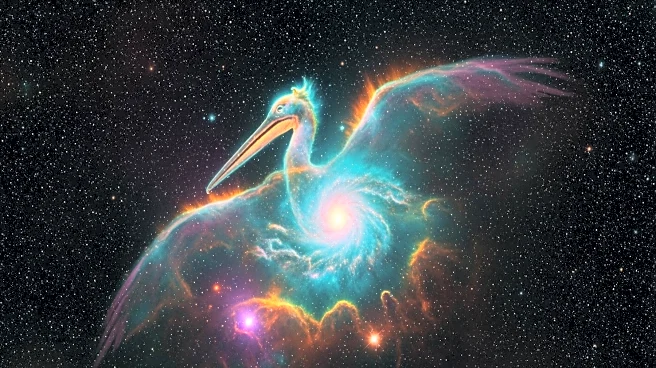
Jason Livingston, a NASA network engineer and astrophotographer, has captured a remarkable image of the Pelican Nebula from his backyard in Henderson, Nevada, just nine miles from the Las Vegas Strip. The nebula, located 2,000 light-years away in the constellation
Cygnus, is known for its resemblance to a pelican. Livingston's photograph reveals the nebula's intricate details, showcasing the effects of radiation from young stars that are reshaping the nebula. Despite the light pollution from nearby Las Vegas, Livingston utilized narrowband imaging techniques to isolate specific wavelengths of light, allowing him to produce a striking image over 27 hours of exposure. The Pelican Nebula serves as a stellar nursery, where future generations of stars will form.
Why It's Important?
This achievement highlights the potential for amateur astronomers and astrophotographers to contribute to the field of astronomy, even from light-polluted areas. Livingston's work demonstrates how advanced imaging techniques can overcome environmental challenges, providing valuable insights into cosmic phenomena. The image of the Pelican Nebula not only adds to the visual understanding of star formation but also inspires public interest in astronomy and space exploration. Such endeavors can encourage more individuals to engage with science and technology, potentially leading to innovations in imaging and observational techniques.
What's Next?
Livingston's success may inspire other amateur astronomers to pursue similar projects, potentially leading to a broader community of citizen scientists contributing to astronomical research. As technology continues to advance, more sophisticated equipment may become accessible to non-professionals, further democratizing the field of astronomy. Additionally, Livingston's work could prompt discussions on mitigating light pollution, encouraging communities to adopt measures that preserve dark skies for scientific and recreational purposes.
Beyond the Headlines
The capture of the Pelican Nebula from a light-polluted area underscores the ongoing issue of light pollution and its impact on astronomical observations. This challenge highlights the need for increased awareness and action to protect night skies. Furthermore, Livingston's dual role as a NASA engineer and astrophotographer exemplifies the intersection of professional expertise and personal passion, illustrating how individuals can leverage their skills to pursue meaningful scientific endeavors outside their primary careers.