








What's Happening?
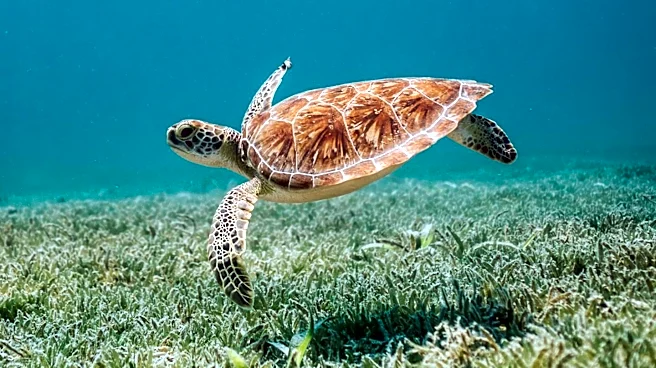
The New England Aquarium's Sea Turtle Hospital has achieved a medical first by successfully treating a Kemp’s ridley sea turtle, nicknamed 'Young Frankenstein,' for a hypoxic brain injury using hyperbaric oxygen therapy. The turtle arrived at the hospital
in December 2025 after being cold-stunned and stranding on Cape Cod, presenting with confusion and listlessness. Despite initial treatments including steroids, antibiotics, and nutritional support, the turtle's condition remained stable but unimproved. In July, the team consulted with Dr. Stephanie Kube, a veterinary neurologist, who suggested twice-weekly therapy in a specialized hyperbaric oxygen chamber. This marked the first documented attempt to use oxygen therapy for brain injury in a sea turtle, though it had been effective for decompression sickness and joint diseases in turtles. After just two treatments, Young Frankenstein showed significant improvement, beginning to forage and eat independently. The turtle was medically cleared for release after two weeks and was released in early September in Dennis, MA.
Why It's Important?
This successful treatment represents a significant advancement in veterinary medicine, particularly for marine wildlife conservation. Hypoxic brain injuries in sea turtles, often resulting from cold-stunning events, have historically been challenging to treat, leading to prolonged rehabilitation or poor outcomes. The innovative use of hyperbaric oxygen therapy opens a new avenue for treating such complex neurological conditions in endangered species. This breakthrough could improve survival rates for sea turtles affected by cold-stunning, a growing concern due to changing ocean temperatures. The collaboration between the New England Aquarium and veterinary neurology specialists highlights the importance of interdisciplinary approaches in wildlife rehabilitation. This success provides a precedent for other wildlife hospitals and researchers to explore similar advanced therapies, potentially benefiting a wider range of marine animals facing similar health challenges.
What's Next?
The success with 'Young Frankenstein' is expected to encourage further research and application of hyperbaric oxygen therapy for brain injuries in sea turtles and potentially other marine species. Veterinary neurologists and marine biologists may collaborate to establish standardized protocols for this treatment, making it more accessible to other rehabilitation centers. Data from this case will likely be analyzed and published, contributing to the broader scientific understanding of neurological recovery in reptiles. Future efforts might focus on identifying early indicators of hypoxic brain injury in stranded turtles to initiate hyperbaric treatment sooner, potentially leading to even better outcomes. The New England Aquarium may also continue to monitor Young Frankenstein, if possible, to assess long-term recovery and the sustained efficacy of the treatment.
Beyond the Headlines
This case underscores the critical role of innovative medical approaches in wildlife conservation, pushing the boundaries of what is possible in animal healthcare. It highlights the ethical imperative to provide advanced medical care to endangered species, reflecting a growing societal value placed on biodiversity and animal welfare. The story also serves as a powerful narrative about resilience and recovery, drawing public attention to the threats faced by sea turtles, such as cold-stunning, which is often linked to climate change and rapid temperature drops. The successful rehabilitation and release of 'Young Frankenstein' can inspire greater public engagement and support for marine conservation efforts, emphasizing that dedicated intervention can make a tangible difference in the lives of individual animals and contribute to species survival.