



What's Happening?
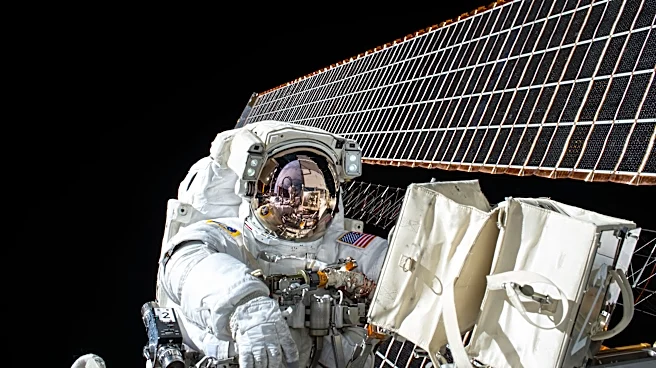
The Expedition 75 crew aboard the International Space Station (ISS) is currently engaged in a combination of life science research and preparations for an upcoming spacewalk. Flight engineers Joshua Kutryk of CSA (Canadian Space Agency) and Anil Menon
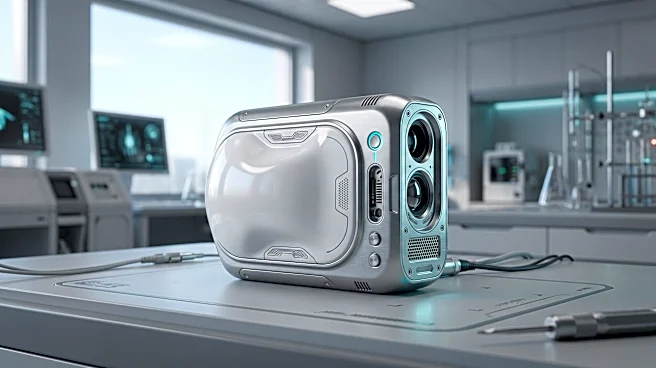
of NASA are preparing for the second in a final series of spacewalks scheduled for Thursday. This spacewalk aims to install the eighth and final roll-out solar array, which will significantly upgrade the station’s power generation system. The installation is expected to increase the station's power capacity by approximately 30 percent, from 160 kilowatts to about 215 kilowatts. In parallel, microgravity research remains a key focus. Kutryk has been using the Bio-Monitor to study how an astronaut's cardiorespiratory system adapts to weightlessness, while flight engineer Luke Delaney is nourishing growing vascular tissue samples printed in the BioFabrication Facility. Flight engineer Jessica Watkins is verifying the operation of a portable DNA sequencer for analyzing antibiotic-resistant bacteria in microgravity. Meanwhile, the three cosmonauts of Expedition 75 are conducting their own research, including studying semiconductor crystal manufacturing and monitoring heart activity.
Why It's Important?
The ongoing activities on the ISS are crucial for advancing human health and technological capabilities both in space and on Earth. The upgrade to the station's power generation system is vital for sustaining current operations and enabling future research, as increased power allows for more experiments and the use of advanced equipment. The life science research being conducted, such as studying cardiorespiratory adaptation to weightlessness and vascular tissue growth, directly contributes to understanding the long-term effects of space travel on the human body. This knowledge is essential for planning future long-duration missions to the Moon, Mars, and beyond, ensuring the health and safety of astronauts. Furthermore, the use of a portable DNA sequencer to analyze antibiotic-resistant bacteria in microgravity has significant implications for maintaining crew health in isolated environments and could inform medical practices on Earth. The research into semiconductor crystals in microgravity also holds potential for developing superior materials with applications in various industries.
What's Next?
The immediate next step is the spacewalk scheduled for Thursday, during which Joshua Kutryk and Anil Menon will install the final roll-out solar array. NASA+ will provide live coverage of this event. Following the power upgrade, the station will have enhanced capabilities for conducting more extensive and power-intensive research. The ongoing life science experiments will continue to yield data that will be analyzed by researchers on Earth, contributing to a growing body of knowledge about microgravity's effects. This data will inform future crew health measures and potentially lead to breakthroughs in medical science. The insights gained from these experiments will be critical for NASA's Artemis missions and other deep space exploration initiatives, as they aim to send humans further into the solar system. The continuous operation and maintenance of the ISS remain paramount for international collaboration in space research and technological development.
Beyond the Headlines
Beyond the immediate scientific and operational benefits, the activities on the ISS represent a broader commitment to international cooperation in space exploration and scientific advancement. The collaboration between NASA, CSA, and Roscosmos on various research projects and station maintenance highlights the shared human endeavor to push the boundaries of knowledge. The development of advanced technologies, such as in-space tissue printing and portable DNA sequencing, not only serves the needs of space missions but also has the potential for significant spin-off applications on Earth, particularly in medicine and materials science. The continuous human presence in low Earth orbit provides a unique laboratory for studying fundamental biological and physical processes in an environment that cannot be replicated on Earth, fostering innovation and inspiring future generations to pursue careers in STEM fields. The ISS serves as a testament to humanity's capacity for sustained exploration and scientific inquiry.