

What's Happening?
The Food and Agriculture Organization (FAO) of the United Nations has launched a high-level mission to Haiti and the Dominican Republic to tackle severe food insecurity and strengthen agrifood systems. Led by FAO Deputy Director-General Beth Bechdol,
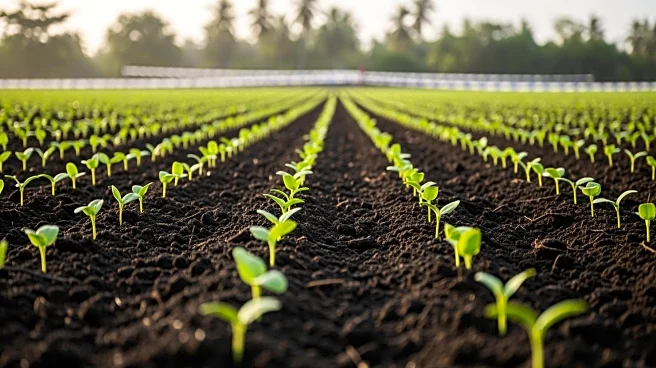
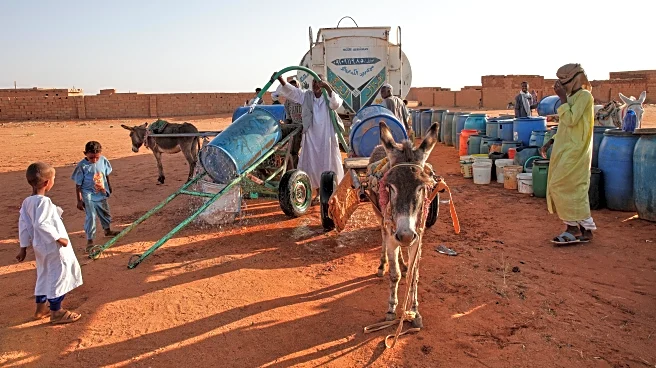
the mission aims to address acute food needs in Haiti, where over 5.7 million people face high levels of food insecurity. The FAO's Emergency Food Production approach has enabled vulnerable families to produce food rapidly, distributing over 210 tonnes of seeds to 76,000 farmers, resulting in more than 7,500 tonnes of food across 4,300 hectares. In the Dominican Republic, efforts focus on biosecurity and market stability to protect agrifood systems from shocks such as animal diseases and climate hazards. The FAO has improved biosecurity compliance significantly, enhancing the country's pork export potential.
Why It's Important?
This initiative is crucial as it addresses both immediate and long-term food security challenges in the Caribbean region. In Haiti, agriculture is a vital lifeline for many, providing a means to sustain livelihoods amid ongoing crises. The FAO's efforts not only aim to alleviate current food shortages but also to build resilience against future disruptions. In the Dominican Republic, strengthening biosecurity and market integration is essential for maintaining regional trade and economic stability. These measures are expected to enhance food security, boost export potential, and support economic growth, benefiting both local communities and the broader Caribbean region.
What's Next?
The FAO is seeking $108 million to further support emergency food production and livelihood protection in Haiti, aiming to assist 860,000 people. In the Dominican Republic, the organization plans to expand biosecurity measures and strengthen livestock systems. These efforts require increased funding and international support to ensure the sustainability of food systems and the protection of livelihoods. The FAO's integrated regional approach highlights the need for strategic investments in agriculture to build resilience and secure food availability across borders.