







What's Happening?
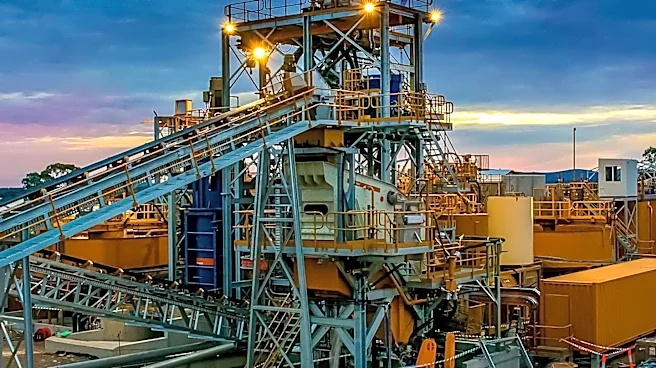
The United States is actively investing in and developing a more integrated domestic rare-earth magnet supply chain. This includes expanding mining operations, increasing the production of separated rare-earth oxides, and establishing manufacturing facilities
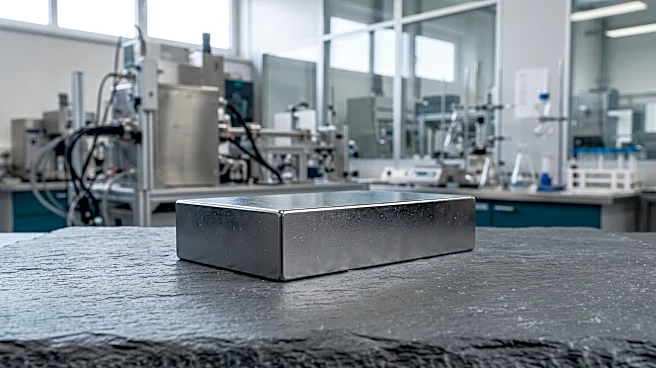
for NdFeB magnets. MP Materials, for instance, operates the Mountain Pass mine in California and has begun manufacturing NdFeB magnets at its Independence facility in Texas. Additionally, the U.S. is focusing on new recycling technologies, with Cyclic Materials opening a facility in Mesa, Arizona, designed to process up to 25,000 tonnes of magnet-bearing end-of-life products annually. American research institutions are also exploring alternative separation processes and more efficient recycling routes.
Why It's Important?
This strategic push is crucial for reducing the U.S.'s reliance on foreign sources, particularly China, which currently dominates the global rare-earth processing and magnet manufacturing sectors. Rare-earth magnets are vital components in numerous high-tech applications, including electric vehicles, wind turbines, defense systems, and consumer electronics. By building a robust domestic supply chain, the U.S. aims to enhance its economic security, national defense capabilities, and technological independence. This diversification effort also seeks to establish more resilient international supply chains, ensuring a stable and secure supply of these critical materials for various industries.
What's Next?
The U.S. plans to continue expanding its domestic production capacity for rare-earth oxides and magnets, with additional facilities and increased output expected from companies like MP Materials. The development of advanced recycling technologies, such as those pioneered by Cyclic Materials, will likely see further investment and scaling. Research into alternative separation processes and more efficient recovery methods from industrial residues will also progress. These efforts are part of a broader international trend where countries like Australia, Brazil, and Canada are also contributing to diversifying the global supply of rare-earth materials, fostering a network of international industrial partnerships rather than isolated national supply chains.
Beyond the Headlines
The drive for a domestic rare-earth magnet supply chain in the U.S. extends beyond mere economic and national security concerns; it also touches upon environmental sustainability and ethical sourcing. By developing its own processing and recycling capabilities, the U.S. has the opportunity to implement stricter environmental regulations and more sustainable practices compared to some existing global suppliers. This could lead to the development of cleaner technologies for rare-earth extraction and refining, potentially setting new global benchmarks. Furthermore, it could foster a more transparent and ethically sound supply chain, addressing concerns about labor practices and environmental degradation often associated with rare-earth mining in other regions.