







What's Happening?
Quantinuum, a company with operations in Cambridge, UK, and Broomfield, Colorado, has introduced Helios, a trapped-ion quantum computer operating with 98 qubits. This development marks a significant advancement in the global effort to build practical
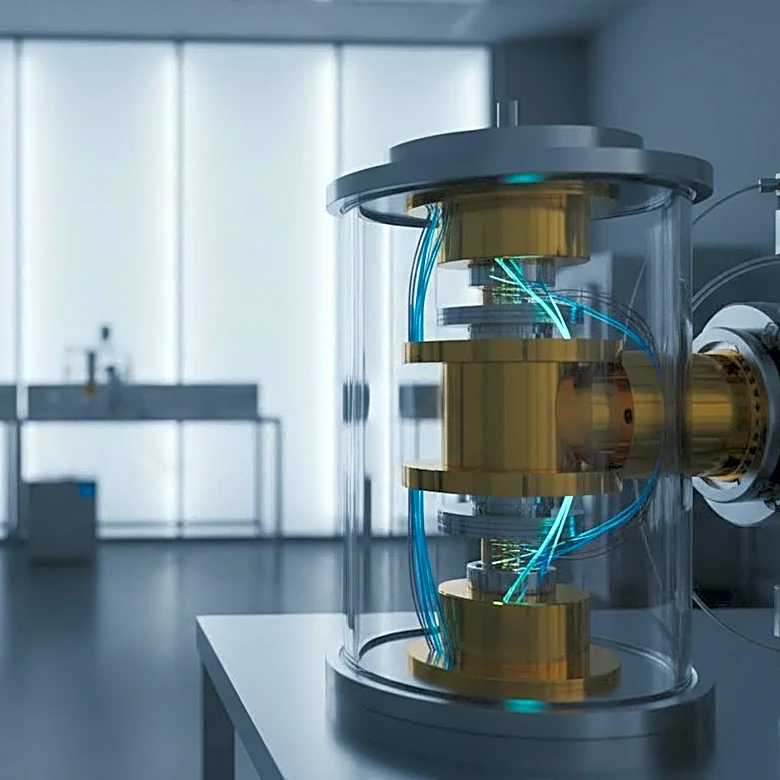
quantum computers, making Helios the largest trapped-ion quantum computer constructed to date. Helios utilizes a Quantum Charge-Coupled Device (QCCD) architecture, which separates regions for storing and processing quantum information, similar to classical computers with distinct memory and processor units. The device's unique rosette geometry, featuring a ring for storage and two streamers for processing connected by a four-way X junction, allows for the physical transport of charged ions (qubits) between these regions. This architecture, combined with new classical control software called Helios runtime, enables the system to handle multiple tasks simultaneously and plan efficient routes for data movement and processing. Helios has demonstrated the ability to perform computations beyond the current capabilities of even the largest supercomputers for certain tasks.
Why It's Important?
The development of Helios is a critical milestone in the U.S. and global race for quantum supremacy, with significant implications for various industries. Quantum computers, by harnessing quantum mechanics, promise to solve complex problems currently intractable for classical supercomputers. This breakthrough could accelerate advancements in fields such as drug discovery, materials science, financial modeling, and artificial intelligence. For U.S. industries, particularly technology and defense, a lead in quantum computing could translate into a competitive advantage, fostering innovation and economic growth. The increased qubit count and improved architecture of Helios bring the industry closer to fault-tolerant quantum computers, which are essential for real-world applications. While current computations are primarily benchmark tests, the ability to perform calculations beyond classical supercomputers indicates the immense potential for future practical applications, potentially revolutionizing data processing and problem-solving capabilities across the U.S. economy.
What's Next?
While Helios represents a substantial engineering advance, the immediate next steps involve further development to achieve practical, fault-tolerant quantum computers. Current estimates suggest that quantum computers will need millions of qubits to perform computations of significant practical importance in science and commerce. Building fault-tolerant quantum computers (FTQCs) from devices like Helios will require connecting thousands of QCCD devices, each with thousands of qubits, via quantum links. Researchers will need to overcome challenges such as engineering and operating systems with an immense number of junctions and managing the slow physical transport of qubits. Quantinuum, along with other companies in the quantum computing space, will likely focus on scaling up qubit counts, improving error correction mechanisms, and developing more sophisticated control software. The integration of Helios with Oracle's cloud infrastructure, as mentioned in related news, indicates a move towards making quantum computing resources more accessible to customers, paving the way for broader experimentation and application development.
Beyond the Headlines
The progress in quantum computing, exemplified by Helios, carries profound implications beyond technological advancements. Ethically, the immense computational power of quantum computers raises questions about data security, cryptography, and the potential for new forms of surveillance or cyber warfare. The development of quantum-resistant encryption methods will become increasingly critical. Culturally, the shift towards quantum computing could redefine our understanding of computational limits and intelligence, potentially leading to new scientific paradigms. Economically, the 'quantum race' could create a new global power dynamic, with nations and companies that lead in this technology gaining significant strategic advantages. The long-term societal impact could include transformative changes in healthcare, energy, and manufacturing, but also necessitates careful consideration of equitable access and the potential for job displacement. The ongoing research and development in this field will require continuous dialogue among scientists, policymakers, and the public to navigate these complex dimensions responsibly.