





What's Happening?
Carl Skau, the Acting Executive Director of the World Food Programme (WFP), has admitted to institutional failure in responding to the warning signs of famine in Sudan. During a UN Security Council session, Skau stated that the international community,
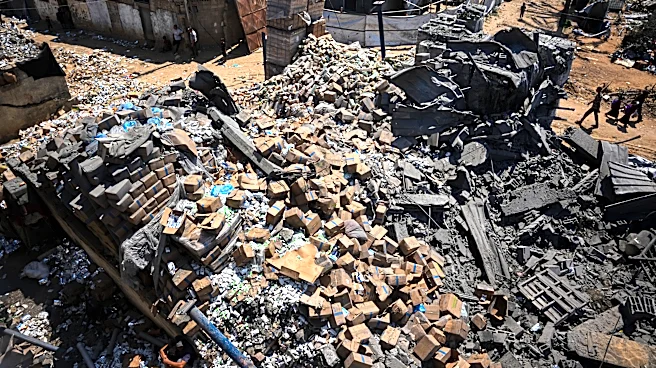
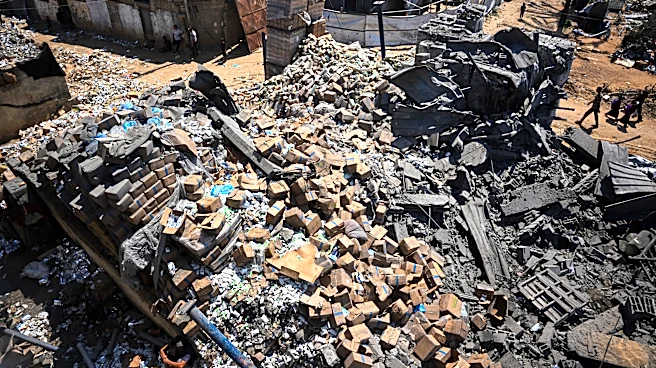
including the Security Council, failed to act on clear warnings regarding atrocities in al-Fashir, Sudan. He emphasized that 'waiting for famine to be declared is a total failure of duty.' This admission comes as Sudan and Gaza are simultaneously experiencing confirmed famines, marking the first time this century that two such crises have occurred concurrently. The session highlighted that famines occurring worldwide are preventable, with representatives noting that these are 'man-made' disasters rather than natural ones. Despite the unanimous adoption of Resolution 2417 in 2018, which condemned starvation as a method of warfare and the unlawful denial of humanitarian access, its potential, particularly for early warning, remains largely untapped. The resolution's original text cited 74 million people facing conflict-induced hunger, a figure that has now doubled to 147 million.
Why It's Important?
The WFP's admission of institutional failure is a critical moment, highlighting systemic shortcomings in the international community's ability to prevent and respond to humanitarian catastrophes. It underscores a significant gap between early warning systems and decisive action, leading to preventable loss of life and immense suffering. The failure to utilize Resolution 2417 effectively, despite its provisions for sanctions against those obstructing humanitarian aid, indicates a lack of political will or enforcement mechanisms. This inaction has allowed conflict-induced hunger to double, demonstrating a profound failure to protect vulnerable populations. The comparison to Somalia's 2017 and 2022 crises, where early action averted catastrophic famine, further emphasizes that the current famines in Sudan and Gaza were not inevitable but rather consequences of delayed or insufficient intervention. This situation erodes trust in international institutions and their capacity to uphold humanitarian principles.
What's Next?
The UN Secretary-General António Guterres has called on the Security Council to act when warning lights are flashing, urging them to ensure accountability and consider sanction measures against those who weaponize food or obstruct aid. The immediate next steps will likely involve increased pressure on the Security Council to enforce Resolution 2417 and take concrete actions, including targeted sanctions, against parties responsible for obstructing humanitarian access. There will also be calls for a re-evaluation of early warning mechanisms and a strengthening of the link between warnings and rapid, decisive responses. However, the Russian Federation has rejected calls to broaden the resolution's application, arguing for country-specific application where conflict creates hunger, indicating potential divisions within the Security Council on how to proceed. The effectiveness of future interventions will depend on overcoming these political obstacles and fostering a unified commitment to preventing famine.
Beyond the Headlines
The WFP's candid admission goes beyond a simple acknowledgment of error; it points to a deeper crisis of responsibility and accountability within the global governance framework. The repeated failure to act on clear warnings suggests that the mechanisms designed to prevent mass starvation are either insufficient or deliberately undermined by political considerations. This raises profound ethical questions about the value placed on human life in conflict zones and the efficacy of international law when powerful actors are unwilling to enforce it. The doubling of conflict-induced hunger since Resolution 2417 was adopted indicates a systemic breakdown, where resolutions become symbolic gestures rather than actionable mandates. This could lead to a growing disillusionment with international institutions and a call for more radical approaches to humanitarian intervention, potentially challenging traditional notions of sovereignty in the face of mass atrocities.