



What's Happening?
A United States federal judge has invalidated the Trump administration's policy that suspended the issuance of immigrant visas to nationals from 75 countries, including Nigeria. U.S. District Judge Jeannette Vargas of the Southern District of New York
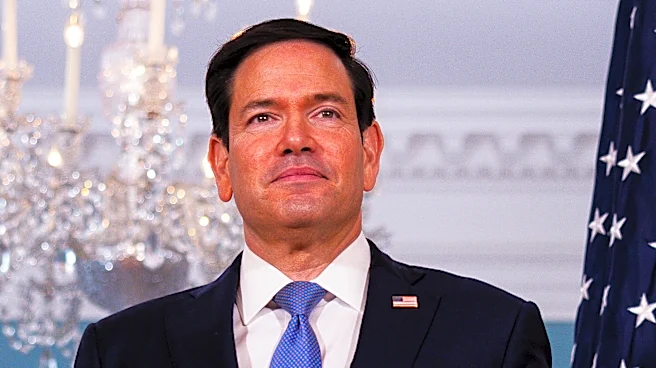
issued the ruling on Friday, August 21, 2026, declaring the policy 'patently unlawful.' The judge determined that the policy exceeded the statutory authority of U.S. Secretary of State Marco Rubio and violated federal immigration law. The policy, which took effect on January 21, 2026, had categorically prohibited the issuance of immigrant visas based on applicants' nationality. The State Department had justified the measure by claiming that immigrants from the affected countries were considered at high risk of relying on public assistance in the United States, potentially becoming a 'public charge.' Judge Vargas found that this blanket restriction based on nationality improperly replaced the individual assessment required under U.S. immigration law.
Why It's Important?
This ruling is significant as it reaffirms the principle of individual assessment in U.S. immigration law, preventing broad, nationality-based restrictions on immigrant visas. For nationals of the 75 designated countries, including Nigeria, who were previously barred from receiving immigrant visas under this policy, the decision removes a major hurdle. It underscores the judiciary's role in checking executive power, particularly in areas affecting civil liberties and international relations. The policy had drawn criticism from immigrant-rights organizations, such as the Catholic Legal Immigration Network and African Communities Together, who brought the lawsuit alongside affected visa applicants and U.S. citizens sponsoring family members. While the ruling does not guarantee visa issuance, it ensures that applicants will be evaluated based on established U.S. immigration and visa requirements rather than a blanket ban.
What's Next?
Following Judge Vargas's ruling, the policy has been vacated under the U.S. Administrative Procedure Act. Immigrant-visa refusals based solely on this policy are to be set aside for further proceedings consistent with the ruling. This means that individuals from the previously designated countries can now have their visa applications processed without the nationality-based suspension. However, applicants will still need to meet all other applicable U.S. immigration and visa requirements. The Trump administration could seek further judicial review of this ruling, potentially appealing the decision to a higher court. Such an appeal would prolong the legal battle and could introduce further uncertainty regarding the future of similar immigration policies. Stakeholders, including immigrant-rights groups and affected individuals, will closely monitor any potential appeals or new policy developments from the administration.
Beyond the Headlines
The striking down of this visa suspension policy highlights a broader tension between executive authority and judicial oversight in U.S. immigration policy. The administration's justification for the policy, citing the risk of immigrants becoming a 'public charge,' reflects an ongoing debate about the economic impact of immigration and the criteria for entry into the United States. This ruling reinforces the legal framework that mandates individual assessment over generalized restrictions, emphasizing due process and non-discrimination based on nationality in immigration matters. It also underscores the influence of advocacy groups in challenging and shaping immigration policies through legal avenues. The decision could set a precedent for future challenges against policies that impose broad, categorical restrictions rather than individualized evaluations, potentially influencing how future administrations approach immigration reform and enforcement.