





What's Happening?
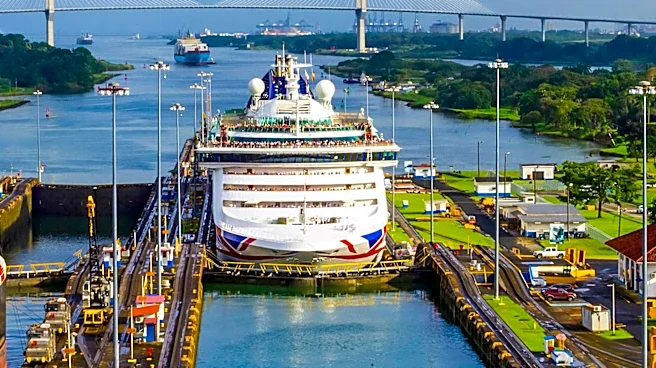
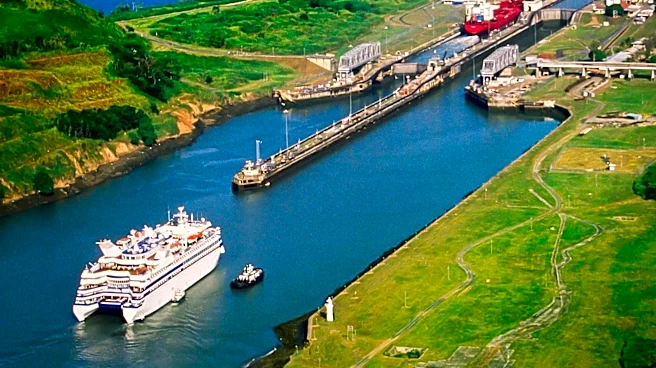
The Panama Canal Authority (ACP) has announced the reintroduction of transit restrictions as it prepares for a potentially severe El Niño event. The probability of a significant El Niño has increased to 81%, prompting the ACP to implement preventive measures
based on experiences from the 2023-2024 El Niño event. These measures include potential capacity restrictions, such as draught limitations and reductions in daily booking slots. The last El Niño-induced drought led to a 50% reduction in canal capacity, highlighting the potential impact on global shipping routes.
Why It's Important?
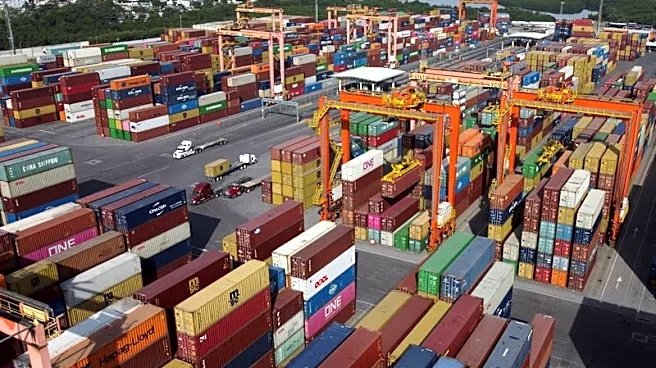
The Panama Canal is a critical artery for global trade, particularly for container shipping lines operating between Asia and the U.S. East Coast. The anticipated restrictions could lead to increased shipping costs and delays, affecting supply chains and potentially leading to higher consumer prices. Shipping companies are already responding, with some announcing surcharges to cover the increased operational costs associated with the canal's reduced capacity. The situation underscores the vulnerability of global trade routes to climate phenomena and the need for adaptive strategies in the shipping industry.
What's Next?
As the El Niño event develops, the ACP will continue to monitor conditions and adjust restrictions as necessary. Shipping companies will need to plan for potential disruptions and consider alternative routes or strategies to mitigate the impact on their operations. The broader implications for global trade and supply chains will depend on the severity and duration of the El Niño event, as well as the effectiveness of the measures implemented by the ACP.