






What's Happening?
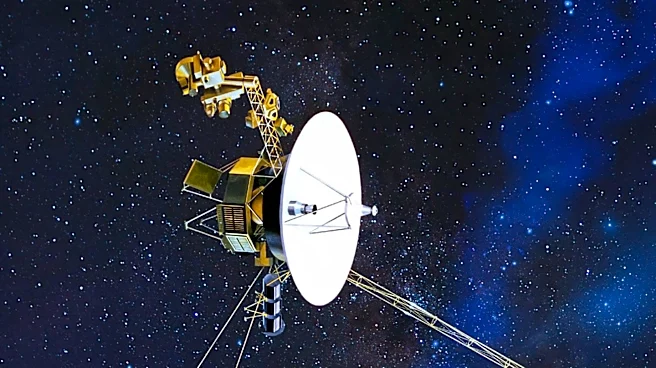
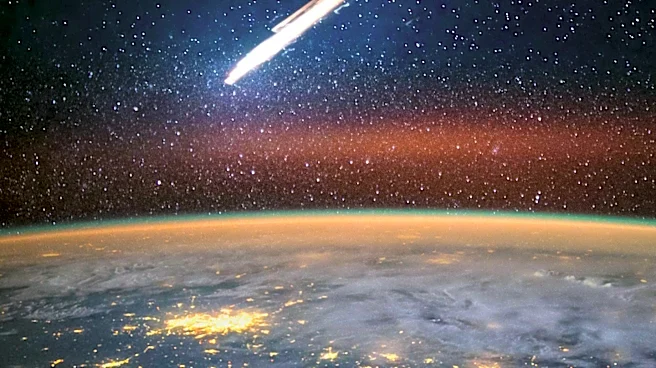
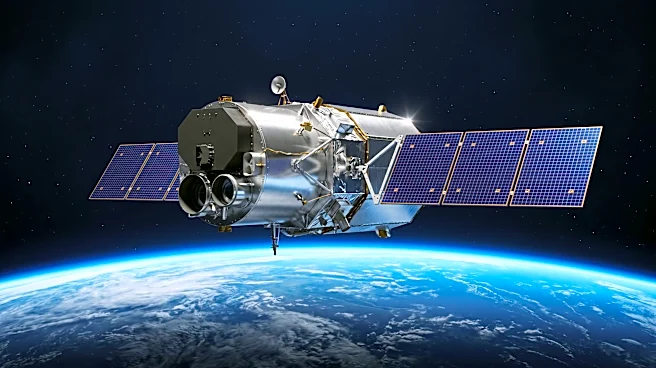
The Neil Gehrels Swift Observatory, previously known as the Swift Gamma-Ray Burst Explorer, concluded its 22-year mission by reentering Earth’s atmosphere on Wednesday. Launched in 2004, the space telescope plunged back into the atmosphere at 7:39 am ET,
just four hours after NASA's prediction. The reentry occurred over the North Sumatra region of Indonesia, west of Malaysia. NASA anticipates that most of the telescope burned up during reentry, though some components may have survived. Operations for Swift were shut down in late October, with its final observation conducted on October 20, due to increased atmospheric drag at its orbiting altitude of 171 miles above Earth's surface.
Why It's Important?
The Swift Observatory's mission was critical for advancing scientific understanding of gamma-ray bursts, which are the most powerful explosions in the universe. Its data helped scientists study phenomena such as the birth of black holes and the early history of the universe. Originally designed for a two-year mission, its extended 22-year operational life provided an extraordinary return on investment for the nation, as stated by Shawn Domagal-Goldman, director of the Astrophysics Division at NASA. The telescope scanned over 2,000 gamma-ray bursts, captured 1.5 million images, and generated 12 terabytes of data, contributing to an estimated 7,000 research papers. This extensive data collection has significantly shaped time-domain astrophysics and established new policies for immediate data accessibility and guest investigator programs.
What's Next?
While the Swift Observatory has concluded its operational life, the vast amount of data it collected over 22 years will continue to be a valuable resource for astrophysicists worldwide. Researchers will likely continue to analyze the 12 terabytes of data, potentially leading to new discoveries and insights into gamma-ray bursts, black holes, and the early universe. The legacy of Swift also includes the operational policies it pioneered, such as making data immediately accessible and providing opportunities for guest investigators. These practices may continue to influence future space missions and scientific collaborations, setting a standard for time-domain astrophysics.
Beyond the Headlines
The successful and prolonged mission of the Swift Observatory highlights the remarkable longevity and resilience of space technology. Its ability to operate for more than ten times its intended lifespan underscores the dedication and ingenuity of the engineers and scientists involved. The decision to extend its mission and later attempt a rescue, despite engineering difficulties, reflects the scientific community's commitment to maximizing data collection and scientific output. The observatory's impact extends beyond specific discoveries, as it fostered a collaborative environment by making its data widely accessible and inviting numerous guest investigators, thereby democratizing access to cutting-edge astronomical research. This approach has set a precedent for future scientific endeavors, emphasizing open science and broad participation.