




What's Happening?
Researchers at the University of Wyoming have published a study indicating that the effects of climate change on ski resorts in the western United States will vary significantly, despite a general trend of decreasing natural snow and fewer opportunities
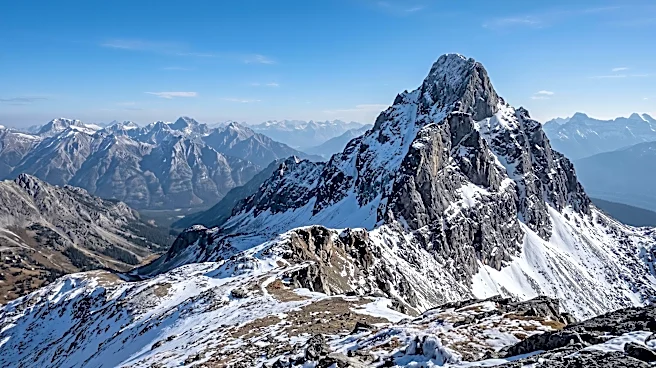
for artificial snowmaking. The study, led by Pramod Adhikari, a research scientist in the Department of Atmospheric Science, utilized the RM1.3 dataset—a high-resolution climate and atmospheric dataset for the Rocky Mountain region. This dataset, which includes 35 years of historical reconstruction and 35 years of future projection, allowed for a detailed analysis of 98 ski areas across the western U.S., with a more focused examination of 36 resorts in the Rocky Mountain region. The findings suggest that while all ski areas will face challenges, those at higher elevations and with historically greater snowfall are generally more resilient. For instance, some high-elevation resorts in the Colorado Rockies may benefit from continued cold mid-winters, offering more snow security as overall temperatures rise. The study also highlighted specific Wyoming resorts like Grand Targhee and Jackson Hole, which are projected to move from low to moderate risk scores in the coming decades.
Why It's Important?
This research is crucial for the U.S. winter recreation industry and the economies of mountain communities that depend on it. The varying impacts of climate change mean that adaptation strategies will need to be localized and tailored, rather than uniform. Resorts facing higher risks may need to reevaluate their long-term viability or consider significant infrastructure investments for snowmaking, while more resilient resorts could potentially see increased demand. The study's high-resolution data provides actionable insights for tourism and recreation planners, water resource managers, and local and state agencies. The economic implications extend to employment, water and energy demand for snowmaking, and decisions regarding future infrastructure and investment in these regions. Understanding these localized effects is vital for developing effective climate adaptation plans and ensuring the sustainability of winter sports and related businesses in the face of a warming climate.
What's Next?
The findings of this study are expected to inform decision-making processes for ski resort operators, local governments, and regional planning bodies across the western U.S. Communities and businesses reliant on winter recreation will likely use this data to assess their climate risks and develop targeted adaptation strategies. This could include exploring options for expanding operations in more snow-secure locations, investing in advanced snowmaking technologies, or diversifying economic activities to reduce dependence on winter sports. The research also suggests a broader application for the RM1.3 dataset, which can be used for studying seasonal snowpack evolution, wind-energy potential, high-impact weather events like wildfires, and climate change attribution and adaptation across the Rocky Mountain region. Future research may delve deeper into specific adaptation measures and their economic feasibility for different types of ski resorts.
Beyond the Headlines
Beyond the immediate concerns for ski resorts, this study underscores the broader implications of climate change on regional economies and natural resource management. The detailed, high-resolution climate modeling employed in this research highlights the importance of granular data for understanding and addressing complex environmental challenges. It also brings to light the ethical considerations surrounding the future of winter sports, including the potential displacement of communities and the environmental footprint of increased artificial snowmaking. The long-term shifts triggered by these climate impacts could lead to significant changes in land use, regional demographics, and the cultural identity of mountain towns. The study serves as a powerful example of how scientific research can translate large-scale environmental trends into locally relevant information, prompting critical discussions about sustainability, resilience, and equitable adaptation in the face of a changing climate.