




What's Happening?
Historical buildings from various civilizations, including ancient Greece and Japan, demonstrate sophisticated earthquake-resistant designs that continue to inform modern engineering. Structures like the Parthenon and Japan's five-story pagodas have survived
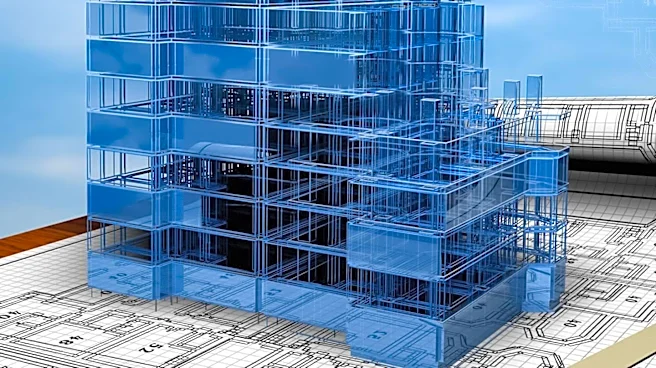
numerous seismic events over centuries due to their flexible construction methods. These designs absorb and dissipate seismic energy rather than rigidly resisting it. For instance, the Parthenon's stacked marble blocks move and tilt during an earthquake, using their weight to return to their original positions and absorb energy. Similarly, the central pillars and stacked components of Japanese pagodas provide flexibility. This principle of flexible structural design is a fundamental concept in contemporary earthquake engineering, enabling the construction of skyscrapers in earthquake-prone regions. Traditional methods of base isolation, such as logs arranged beneath foundations in Iran or stones wrapped in nets in Peru, also predate modern base-isolation technology, which uses laminated rubber bearings to reduce ground movement transferred to buildings.
Why It's Important?
The study of ancient earthquake-resistant architecture is crucial for advancing modern construction techniques, particularly in the U.S. and other seismically active regions. By understanding how historical structures endured major earthquakes, engineers can develop more resilient infrastructure, potentially saving lives and reducing economic losses. The 1906 San Francisco earthquake, for example, highlighted the need for modern earthquake-resistant technologies, prompting global efforts in this field. Incorporating lessons from flexible designs and base-isolation principles can lead to safer buildings and critical facilities, such as hospitals, which need to remain operational immediately after an earthquake. While modern base isolation is effective, its high initial cost remains a barrier to wider adoption, especially in residential housing. Exploring affordable and accessible solutions, possibly inspired by traditional methods, is vital for protecting communities globally.
What's Next?
Future developments in earthquake protection are likely to focus on integrating ancient wisdom with cutting-edge technology. Researchers are exploring advanced concepts like using superconducting magnets to levitate buildings, completely isolating them from ground vibrations. The challenge lies in ensuring that lessons from past disasters are continuously shared and applied, especially given that major earthquakes often occur at intervals longer than a human lifespan, leading to complacency. Continued investment in technological development and the creation of affordable, accessible solutions for earthquake-prone regions, including developing countries, will be critical. This includes refining base-isolation technologies and exploring new materials and construction methods that mimic the flexibility and energy-absorbing properties of ancient designs.
Beyond the Headlines
The ongoing relevance of ancient architectural practices underscores a deeper understanding of natural forces that civilizations developed through centuries of observation and adaptation. This interdisciplinary approach, combining archaeology, engineering, and materials science, highlights the value of historical knowledge in addressing contemporary challenges. The ethical implications involve ensuring equitable access to advanced earthquake-resistant technologies, as the high cost of modern solutions can exacerbate vulnerabilities in less affluent communities. Culturally, preserving and studying these ancient structures not only offers engineering insights but also connects us to the ingenuity and resilience of past societies, reminding us that humanity has always sought to mitigate the destructive power of natural phenomena. This continuous learning from history is essential for building a more resilient future.