







What's Happening?
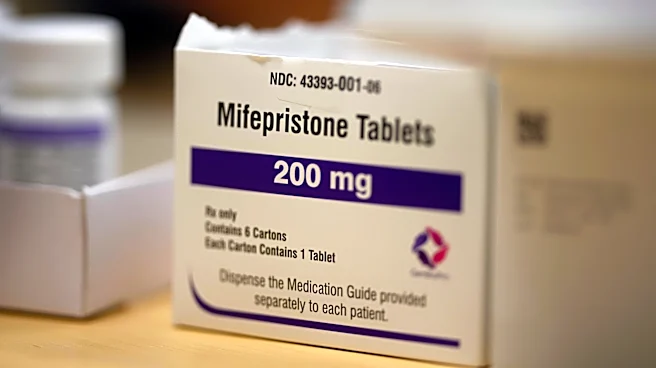
A federal appeals court has issued a ruling that restricts access to mifepristone, a common abortion pill, by blocking its distribution through mail. The New Orleans-based 5th U.S. Circuit Court of Appeals has mandated that mifepristone can only be dispensed
in-person at clinics. This decision follows the Supreme Court's 2022 ruling that overturned Roe v. Wade, which had previously protected abortion rights nationwide. The ruling is expected to be appealed to the Supreme Court. Mifepristone, approved in 2000, is used in combination with misoprostol to terminate early pregnancies. The FDA had initially imposed strict regulations on its distribution due to rare cases of excessive bleeding, requiring in-person prescriptions. These restrictions were lifted during the COVID-19 pandemic, allowing for mail prescriptions. The recent court decision has raised concerns about access to abortion and miscarriage care, particularly affecting rural communities, low-income individuals, and marginalized groups.
Why It's Important?
The court's decision to restrict the mailing of mifepristone has significant implications for abortion access across the United States. By requiring in-person distribution, the ruling could disproportionately impact individuals in rural areas and those with limited access to healthcare facilities. This decision may also exacerbate existing inequalities in healthcare access, particularly for low-income individuals, people with disabilities, and communities of color. The ruling highlights ongoing legal and political battles over abortion rights in the U.S., following the Supreme Court's decision to overturn Roe v. Wade. The potential appeal to the Supreme Court could further shape the legal landscape of abortion access in the country, influencing public policy and healthcare practices.
What's Next?
The ruling is likely to be appealed to the Supreme Court, which could result in further legal scrutiny and potential changes to abortion access laws. Stakeholders, including healthcare providers, legal advocates, and policymakers, may respond with efforts to challenge or adapt to the new restrictions. The decision may also prompt legislative actions at the state and federal levels to address the implications of restricted access to abortion medication. As the legal process unfolds, the impact on healthcare providers and patients will continue to be a focal point of public and political discourse.