








What's Happening?
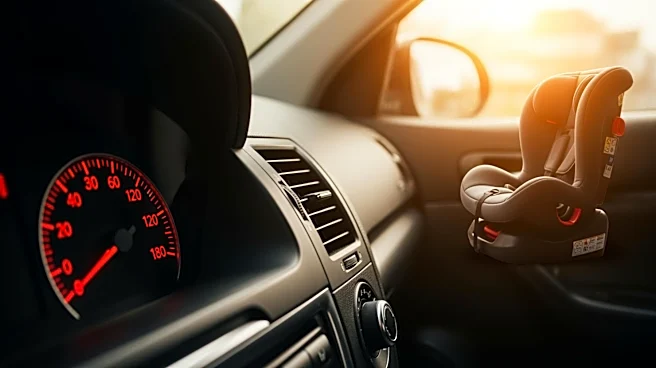
Consumer Reports has issued a warning about the dangers of leaving children unattended in vehicles, highlighting that on average, 37 children die each year from heatstroke after being left in cars. The report emphasizes that even moderate outdoor temperatures
can lead to dangerously high temperatures inside a vehicle. Tests conducted by Consumer Reports showed that when the outside temperature was 61 degrees Fahrenheit, the temperature inside a closed car could exceed 105 degrees within an hour. This poses a significant risk as children's bodies heat up three to five times faster than adults. The report stresses that it is never safe to leave a child in a vehicle, even with windows cracked or the car parked in the shade. The majority of these fatalities occur when children are unknowingly left in the car, often due to stress, sleep deprivation, or changes in routine.
Why It's Important?
The issue of hot car fatalities is a critical public safety concern, particularly for parents and caregivers. The report underscores the need for increased awareness and preventive measures to avoid these tragic incidents. The impact of such fatalities is profound, affecting families and communities deeply. By highlighting the risks and providing practical safety tips, such as checking the back seat and keeping cars locked, Consumer Reports aims to reduce the number of these preventable deaths. This information is vital for public health and safety, as it encourages behavioral changes that can save lives. The report also serves as a reminder of the broader implications of vehicle safety and the importance of vigilance in everyday routines.
What's Next?
To address this issue, Consumer Reports suggests implementing routine checks and creating visual reminders to ensure children are not left in vehicles. Parents and caregivers are encouraged to place personal items like bags or jackets in the back seat as a reminder to check for children before exiting the car. Additionally, keeping vehicles locked at all times can prevent children from entering cars unsupervised. These steps are part of a broader effort to raise awareness and promote safety practices that can prevent future tragedies. Continued education and advocacy are expected to play a key role in reducing the incidence of hot car fatalities.