


What's Happening?
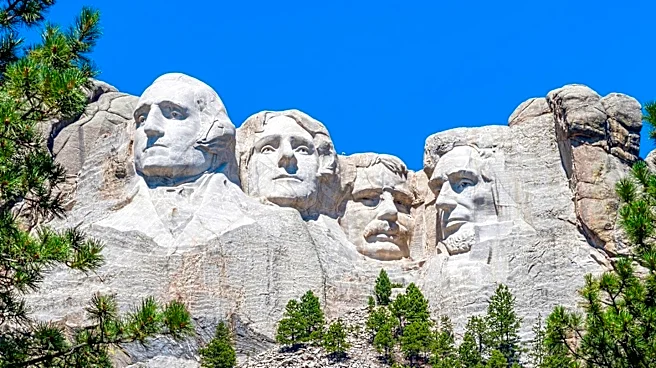
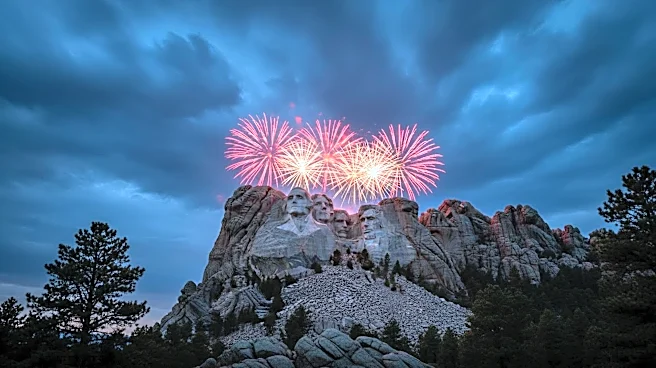
Mount Rushmore, located in the Black Hills of South Dakota, stands as a monumental tribute to four U.S. presidents: George Washington, Thomas Jefferson, Theodore Roosevelt, and Abraham Lincoln. The sculpture, designed by artist Gutzon Borglum, was completed
in 1941 and is celebrated for its artistic and historical significance. Borglum, known for his grand vision and bold style, chose these presidents to represent the founding, expansion, preservation, and development of the United States. The project was initially conceived to boost tourism in South Dakota and was supported by local and national figures, including President Calvin Coolidge. Despite financial and logistical challenges, the monument was completed, becoming a symbol of American democracy and resilience.
Why It's Important?
Mount Rushmore is more than a tourist attraction; it is a symbol of American ideals and history. The monument reflects the country's values and the vision of its leaders, serving as a reminder of the nation's journey and achievements. It also highlights the role of art in shaping national identity and the importance of preserving historical landmarks. The monument attracts millions of visitors annually, contributing to the local economy and promoting cultural heritage. Its creation involved significant collaboration and support from various stakeholders, demonstrating the power of collective effort in achieving monumental goals.
Beyond the Headlines
Mount Rushmore's creation involved complex ethical and cultural considerations, including the impact on the indigenous Lakota Sioux, for whom the Black Hills are sacred. The monument's construction on this land remains a point of contention, reflecting broader issues of cultural preservation and historical reconciliation. Additionally, the choice of presidents and the monument's unfinished elements invite ongoing discussions about representation and the evolving narrative of American history. These aspects underscore the need for inclusive dialogue and recognition of diverse perspectives in commemorating national heritage.