








What's Happening?
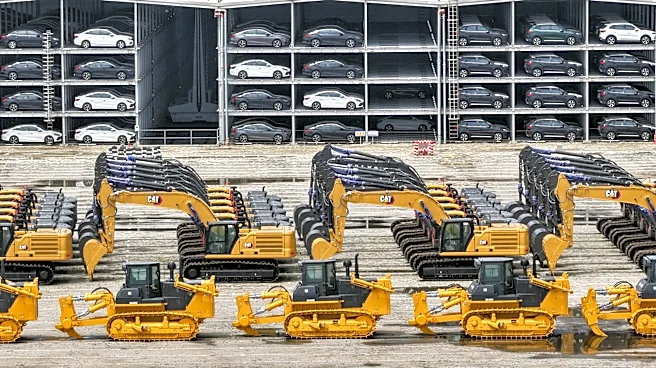
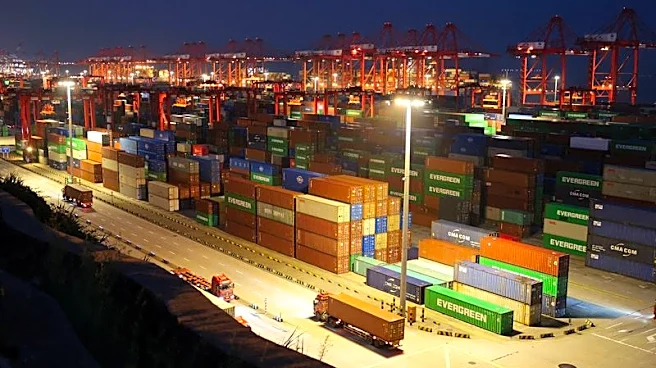
China's economy experienced a significant slowdown, growing at an annualized rate of 4.3% in the second quarter of 2026, marking its slowest pace in over three years. This deceleration comes despite a notable increase in exports, particularly in high-tech
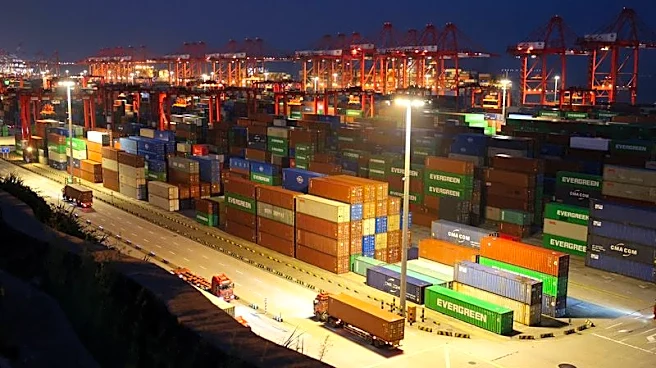
sectors such as artificial intelligence and electric vehicles. The growth rate fell short of the previous quarter's 5% expansion and the government's target of 4.5% to 5% for the year. The imbalance in the economy is highlighted by strong export performance contrasted with weak domestic spending and investment. Fixed asset investment declined by 5.7% year-on-year, and retail sales of consumer goods rose only 1.3%. The Chinese government is focusing on high-tech manufacturing and aims to stabilize employment while building a robust domestic market.
Why It's Important?
The slowdown in China's economic growth has significant implications for global markets, particularly for countries reliant on Chinese exports. The focus on high-tech manufacturing and the imbalance between strong exports and weak domestic demand could lead to economic instability. The decline in domestic spending and investment suggests potential challenges in sustaining long-term growth. This situation may affect global supply chains, especially in technology and automotive sectors, where China plays a crucial role. Additionally, the economic transition could impact employment and social stability within China, influencing global economic dynamics.
What's Next?
China's leadership is expected to continue its focus on high-tech industries while attempting to boost domestic consumption and investment. The government may introduce policies to stabilize employment and support consumer spending. Internationally, countries may need to adjust their economic strategies in response to China's shifting growth model. The global community will be watching how China navigates these economic challenges and the potential impact on international trade relations.