
What's Happening?
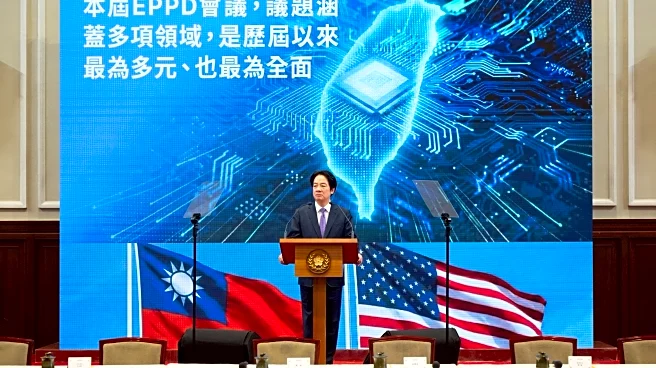
Taiwan's President Lai Ching-te has affirmed the strong relationship between Taiwan and the United States, describing it as 'rock solid.' This statement follows a phone call between President Donald Trump and Chinese leader Xi Jinping, where the future
of Taiwan was a topic of discussion. During the call, Xi cautioned Trump to be 'prudent' regarding arms sales to Taiwan. Despite China's objections, the U.S. remains Taiwan's primary informal ally and arms supplier. Recently, the U.S. State Department announced a significant arms package to Taiwan, valued at over $11.1 billion, which includes missiles, artillery systems, and drones. This package is pending Congressional approval. China's response to the proposed arms sales included military drills around Taiwan. Additionally, Taiwan's opposition party, the KMT, and some citizens have expressed concerns over increased defense spending, which has led to a budgetary impasse in Taiwan's parliament.
Why It's Important?
The reaffirmation of strong Taiwan-U.S. ties is significant in the context of regional security and international diplomacy. The U.S.'s continued support for Taiwan, particularly through arms sales, underscores its strategic interest in maintaining stability in the Asia-Pacific region. This relationship is crucial for Taiwan's defense capabilities, especially given China's claims over the island and its military posturing. The situation also highlights the delicate balance the U.S. must maintain in its relations with China, a major global power, while supporting Taiwan. The arms sales and defense budget discussions in Taiwan reflect internal political dynamics and the challenges of balancing national security with economic considerations. The outcome of these developments could influence U.S.-China relations and the geopolitical landscape in the region.
What's Next?
Looking ahead, the U.S. Congress will need to decide on the approval of the arms sales package to Taiwan. President Trump's upcoming visit to China in April could further influence the dynamics of U.S.-China-Taiwan relations. Additionally, Taiwan's government will continue to navigate internal political challenges regarding defense spending. The international community will be watching closely to see how these developments affect regional stability and the balance of power in the Asia-Pacific. Potential reactions from China, including further military exercises or diplomatic measures, could also shape future interactions between these key players.