




What's Happening?
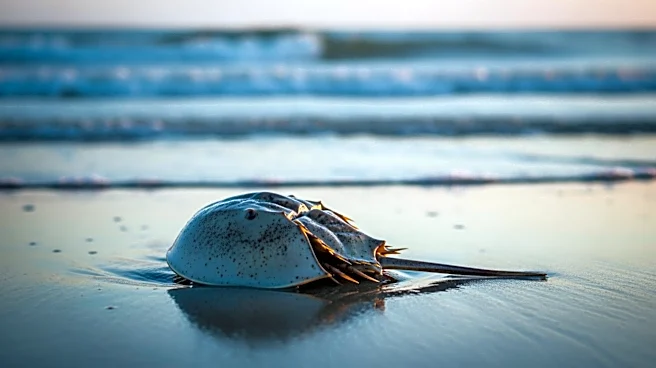
Recent corrections to a scientific report have highlighted a severe decline in the population of the Atlantic horseshoe crab (Limulus polyphemus) in Long Island Sound, USA. The updated data, which includes additional years of monitoring, shows a significant
decrease in the number of these crabs, particularly in the Central Sound area. The study utilized a variety of statistical models to assess changes in population dynamics, revealing that the decline is influenced by both local and larger-scale environmental factors. The report emphasizes the need for long-term monitoring to better understand these trends and the potential impacts of environmental changes.
Why It's Important?
The decline of the Atlantic horseshoe crab population is significant due to the species' ecological and economic importance. Horseshoe crabs play a crucial role in coastal ecosystems, serving as a food source for migratory birds and other marine life. Additionally, their blue blood is vital for medical research and the production of Limulus Amebocyte Lysate, used to test for bacterial contamination in medical equipment. A continued decline could disrupt these ecosystems and impact industries reliant on horseshoe crabs. Understanding the factors driving this decline is essential for developing effective conservation strategies and ensuring the sustainability of these ecosystems.
What's Next?
Further research and monitoring are necessary to determine the precise causes of the population decline and to develop effective conservation measures. Stakeholders, including environmental agencies and conservation groups, may need to collaborate on strategies to mitigate the impacts of environmental changes on horseshoe crab populations. This could involve habitat restoration, stricter regulations on harvesting, and public awareness campaigns to highlight the importance of preserving this species.