
What's Happening?
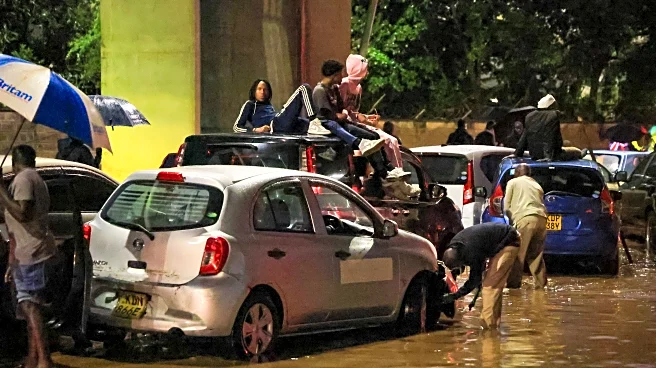
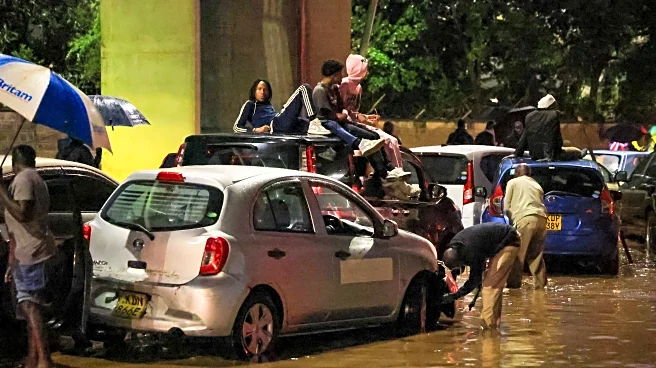
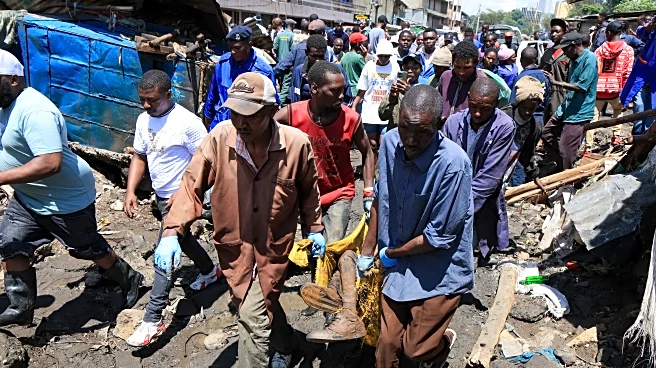
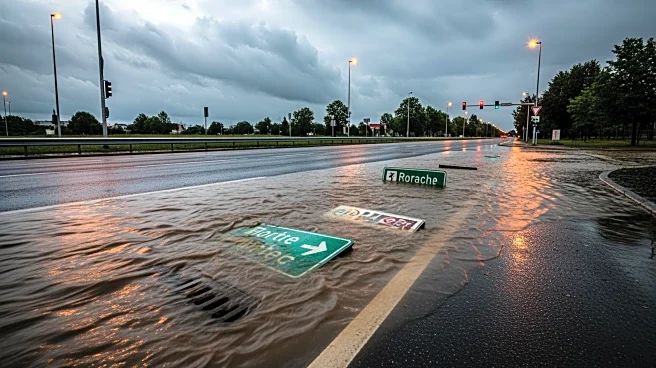
At least 25 people have died in Nairobi, Kenya, following severe flash flooding caused by heavy rains. The flooding has disrupted flights, stranded motorists, and caused significant damage to vehicles and infrastructure. Nairobi's police chief, George
Seda, reported that some victims drowned while others were electrocuted. The Kenyan military has been deployed to assist in rescue operations, and the government has promised to cover hospital bills for those affected. President William Ruto has directed a multi-agency team to relocate people in danger and distribute relief food. The flooding has been attributed to clogged drainage systems, with residents criticizing city authorities for inadequate preparation. The heavy rains mark the start of Kenya's long rainy season, which has historically resulted in flooding and landslides.
Why It's Important?
The flooding in Nairobi highlights the challenges faced by urban areas in managing extreme weather events, which are becoming more frequent due to climate change. The disaster underscores the need for improved infrastructure and emergency preparedness in cities prone to such events. The Kenyan government's response, including military deployment and relief efforts, is crucial in mitigating the immediate impact on affected communities. However, the situation also raises questions about long-term urban planning and the effectiveness of existing drainage systems. The economic impact is significant, with disruptions to transportation and potential long-term effects on local businesses and livelihoods.
What's Next?
As rescue operations continue, the Kenyan government is likely to face increased pressure to address the underlying infrastructure issues that contributed to the flooding. There may be calls for investment in better drainage systems and urban planning to prevent future disasters. The government will also need to focus on rebuilding and providing support to affected communities. International aid and support from non-governmental organizations could play a role in recovery efforts. Additionally, the situation may prompt discussions on climate change adaptation strategies in urban areas across Africa.