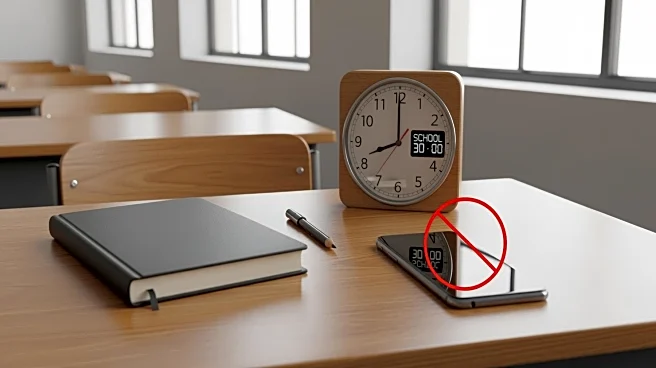




What's Happening?
A recent survey conducted by the nonpartisan research initiative Phones in Focus, involving approximately 68,000 teachers from 17% of U.S. public schools, has revealed that restrictive cellphone policies are improving student performance and social interactions.
The survey found that the percentage of schools with bell-to-bell cellphone bans increased from 60% in the 2024-2025 school year to 74% in 2025-2026. These bans prohibit students from using cellphones during the school day. The study, led by psychologist Angela Duckworth and Stanford University economists, highlights that such policies have led to fewer discipline issues and more face-to-face interactions among students. Additionally, 17 states and Washington, D.C., have enacted statewide bans on student cellphone use across all grades in the past two years.
Why It's Important?
The implementation of cellphone bans in schools is significant as it addresses the growing concern over digital distractions in educational settings. By reducing cellphone usage, schools aim to enhance student engagement and foster social skills that are crucial for personal development. The bans are part of a broader trend to improve educational outcomes by minimizing distractions. This move could potentially lead to a shift in how technology is integrated into learning environments, prompting schools to reconsider the role of personal devices in education. The positive feedback from educators suggests that these policies could lead to long-term improvements in student behavior and academic performance.
What's Next?
As schools continue to enforce cellphone bans, the focus may shift to addressing other digital distractions, such as laptops, which are still used by students for non-academic purposes. The survey indicates that laptops are becoming a new challenge for schools, as they are frequently used for texting and social media. Schools may need to develop comprehensive policies that address the use of all personal devices to ensure that students remain focused on their studies. Additionally, ongoing evaluation of the impact of these bans will be crucial in determining their effectiveness and potential need for adjustments.