
What's Happening?
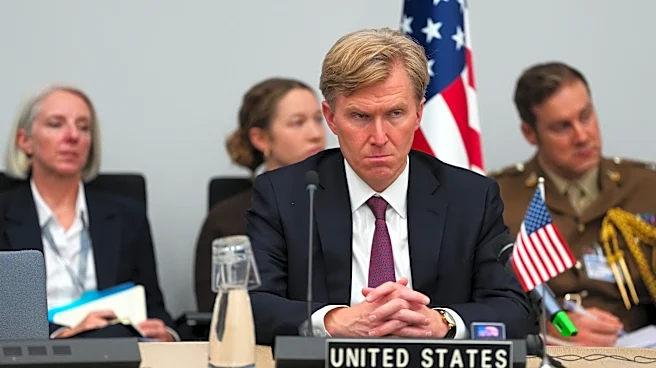
Secretary of the Air Force Troy Meink recently announced that the U.S. Space Force now possesses "on-orbit space control weapons capable of defending the joint force against hostile adversary action."
This marks a significant development in the militarization of space, a concept that has been discussed since the first Gulf War. The announcement comes amidst growing concerns about potential armed conflict in space, exacerbated by Russia's aggression in Ukraine and discussions about targeting commercial satellites. While the legality of such weapons is affirmed, the broader question of how the United States should use them and what constitutes a legitimate target in space remains. The U.S. has an opportunity to shape international norms and rules regarding space warfare, particularly concerning commercial satellites that increasingly contribute to military operations, such as Starlink's role in Ukraine's defense.
Why It's Important?
The existence of U.S. space weapons fundamentally alters the landscape of international security and warfare. It signals a new era where space is not merely a domain for observation and communication but a potential battlefield. This development has profound implications for global stability, as it could trigger an arms race in space, with other nations developing similar capabilities. The legal framework for space warfare is still evolving, and the U.S. has a critical role in shaping these norms. The targeting of commercial satellites, which are often dual-use (civilian and military), presents complex ethical and legal challenges. Defining what constitutes a legitimate military objective in space is crucial to prevent unintended escalation and ensure a stable and predictable space environment. The integration of commercial capabilities into military architecture, as seen with the Space Force's Commercial Augmentation Space Reserve, further blurs the lines between civilian and military assets, making targeting decisions more intricate.
What's Next?
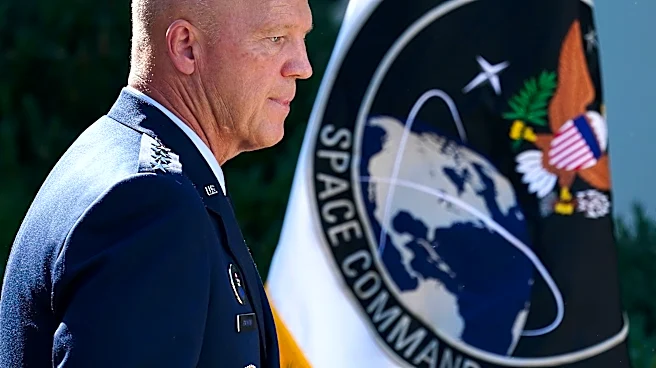
The United States faces the immediate challenge of defining its policy and strategy for the use of these new space weapons. This includes establishing clear guidelines on what constitutes a legitimate military objective in space, especially concerning commercial satellites. The U.S. should actively work towards shaping international norms and rules to ensure predictability and stability in the space domain. This involves engaging with allies and adversaries to develop a shared understanding of acceptable behavior and to hold aggressors accountable for violations. The Space Force's Chief of Space Operations, General Douglas Schiess, has emphasized the need for "disciplined and responsible choices" in building and sustaining combat advantage. Future discussions will likely focus on deterrence strategies, the potential for a space arms race, and the development of international treaties or agreements to govern the use of space weapons and protect critical space infrastructure.
Beyond the Headlines
The deployment of space weapons by the U.S. Space Force raises deeper questions about the long-term implications for humanity's presence in space. The potential for conflict in orbit could jeopardize the vast array of civilian, scientific, and commercial activities that rely on satellites, from weather forecasting and GPS to global communication. A "race to the bottom" in space warfare, where minimum standards are adopted, could lead to a chaotic and dangerous environment, with cascading effects on Earth. The ethical considerations of targeting commercial assets, which often serve essential civilian functions, are also paramount. The U.S. has an opportunity to lead by example, advocating for responsible behavior and the establishment of robust international frameworks that prioritize the peaceful and sustainable use of outer space. This development necessitates a comprehensive national interest approach that balances tactical military advantage with the broader goals of a stable and predictable space domain for all users.