

What's Happening?
Israeli Prime Minister Benjamin Netanyahu has urged U.S. President Donald Trump to impose four critical demands on Iran in any potential deal to prevent military strikes against Tehran. Netanyahu's demands include the removal of all enriched uranium from
Iran, the cessation of Iran's enrichment capabilities, enforcement of limits on Iranian ballistic missile ranges, and the dismantling of Iranian proxy militias in the region. These demands were communicated during a recent meeting between Netanyahu and Trump. The U.S. is currently engaged in diplomatic efforts to reach an agreement with Iran, which could either prevent a regional war or lead to a new era of stability. Netanyahu expressed skepticism about Iran's reliability in adhering to any agreement, citing past instances of deception.
Why It's Important?
The outcome of these negotiations holds significant implications for Middle Eastern stability and global security. A successful deal could prevent military conflict and reduce Iranian influence through its proxy forces, which are seen as destabilizing elements in the region. For the U.S., this is a test of President Trump's diplomatic strategy, which emphasizes peace through strength. The stakes are high, as failure to reach an agreement could lead to military escalation, affecting global oil markets and regional alliances. Israel's security concerns are central to these discussions, given its proximity to Iran and the threat posed by Iranian-backed groups.
What's Next?
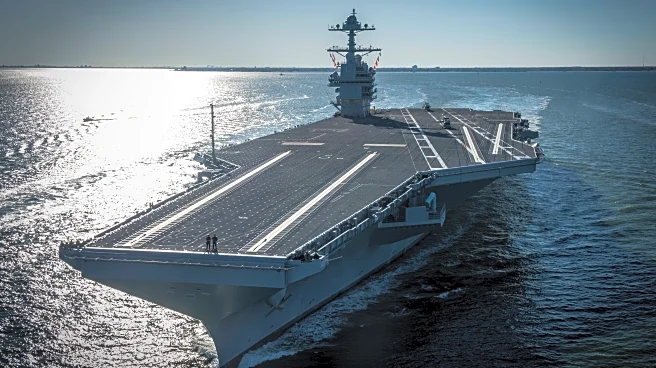
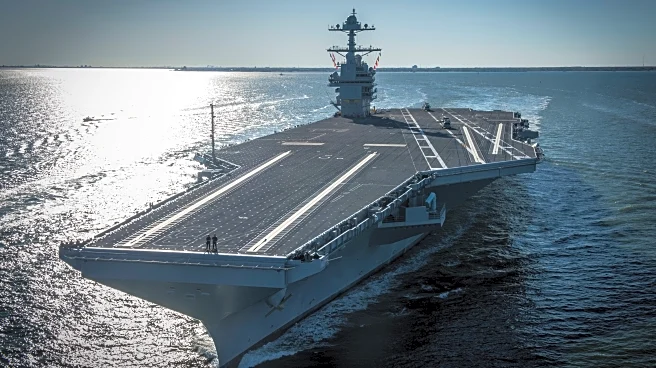
As talks continue, the U.S. has increased its military presence in the Middle East, deploying additional warships and military assets to deter Iranian aggression and protect regional allies. The diplomatic efforts are ongoing, with Iranian officials engaging in discussions with international bodies to reach a fair agreement. The situation remains fluid, with potential for either a diplomatic breakthrough or increased tensions leading to military action.