




What's Happening?
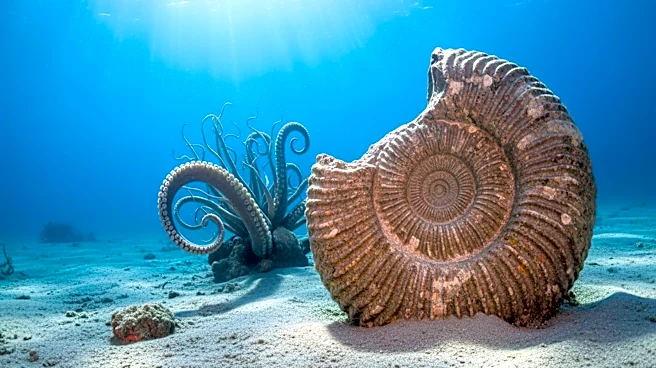
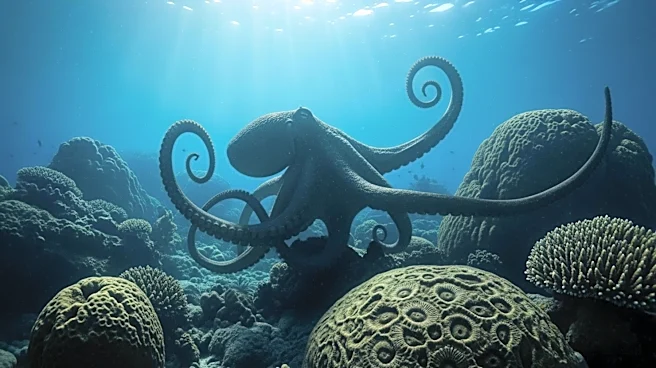
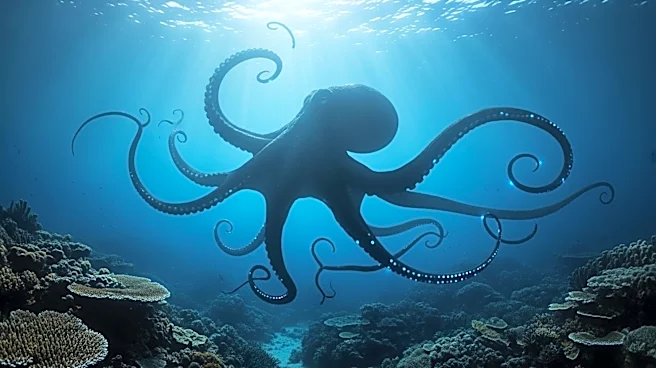
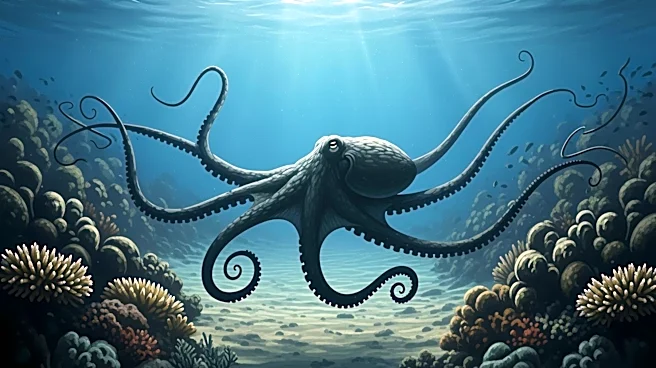
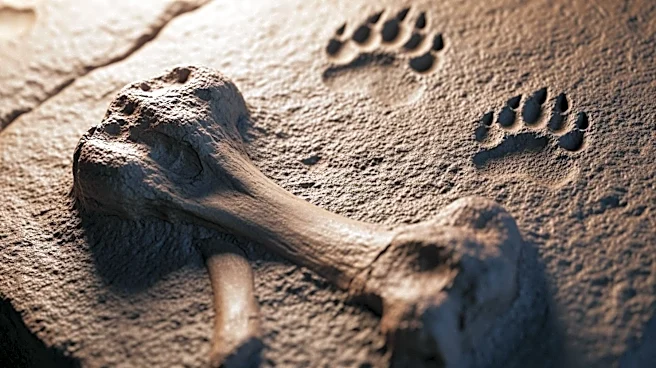
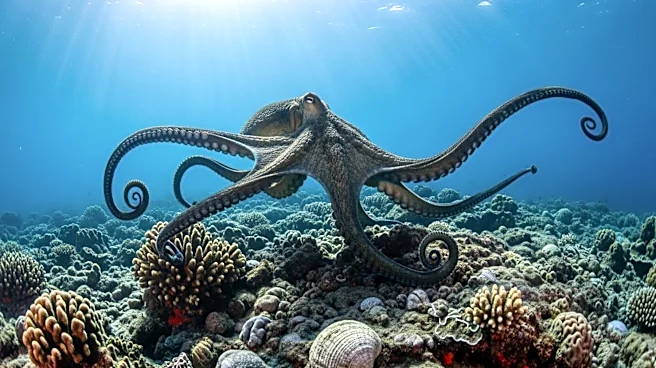
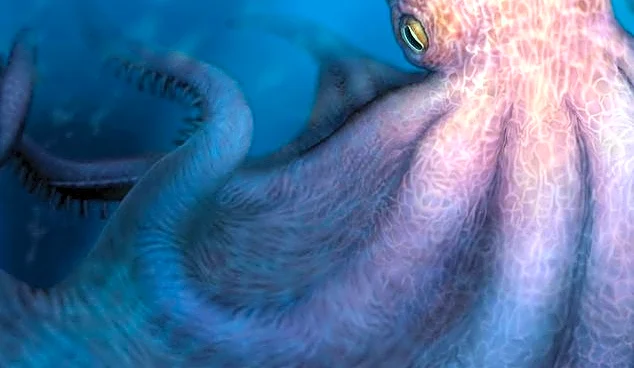
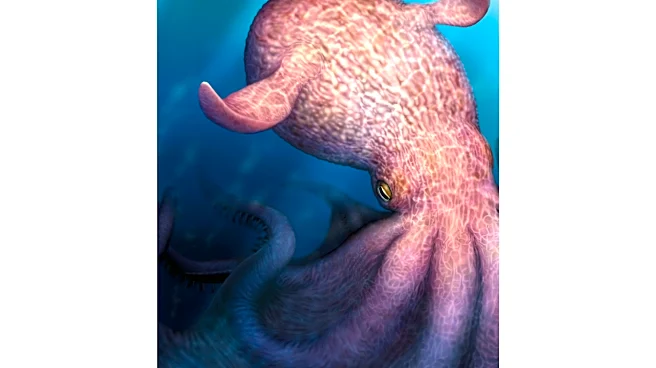
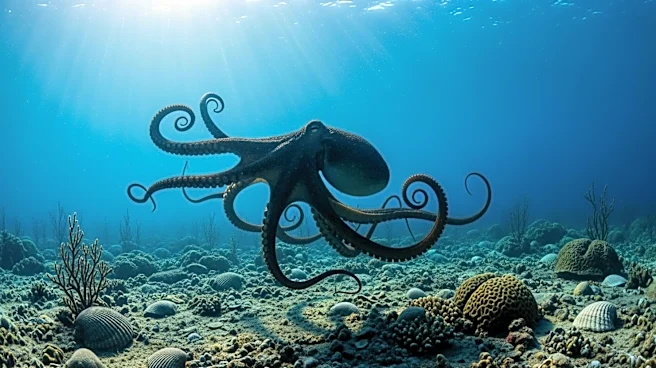
Recent research led by scientists at Hokkaido University has uncovered evidence suggesting that ancient octopuses were massive predators at the top of the marine food chain during the Late Cretaceous period. The study, published in Science, utilized high-resolution
grinding tomography and artificial intelligence to analyze fossilized jaws from sites in Japan and Vancouver Island. These findings indicate that the extinct finned octopuses, known as Cirrata, reached lengths of up to 20 meters and exhibited powerful predatory behavior, challenging previous assumptions about ancient marine ecosystems.
Why It's Important?
This discovery reshapes the understanding of early octopus evolution and ancient ocean food chains. The evidence suggests that invertebrates, like these giant octopuses, could evolve into apex predators, competing directly with large vertebrates. This challenges the long-held view that vertebrate predators dominated ancient marine ecosystems. The study also highlights the potential of digital fossil-mining techniques combined with artificial intelligence to uncover hidden fossils and reconstruct ancient ecosystems in greater detail, offering new insights into the complexity and diversity of life forms during the Cretaceous period.
What's Next?
The findings open new avenues for research into the evolution of intelligence and predatory behavior in invertebrates. Scientists may further explore the implications of lateralization observed in the fossil jaws, which could indicate advanced brain function in these ancient octopuses. Additionally, the study's methodology could be applied to other fossil records, potentially revealing more about the roles of invertebrates in ancient ecosystems and their interactions with vertebrate species.
Beyond the Headlines
The study suggests that the loss of superficial skeletons and the development of powerful jaws were crucial for octopuses to become large, intelligent predators. This insight could lead to a reevaluation of the evolutionary pressures and adaptations that shaped marine life during the Cretaceous period. The research also raises questions about the ecological dynamics and competition between invertebrates and vertebrates, offering a new perspective on the complexity of ancient marine ecosystems.