


What's Happening?
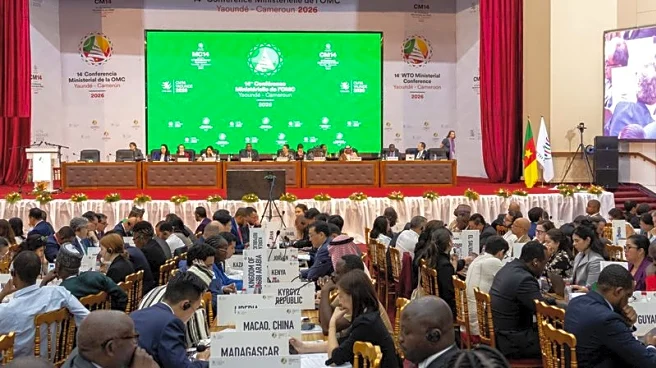
Trade ministers from around the world have convened in Yaounde for a high-level World Trade Organization (WTO) meeting to discuss critical issues in agriculture and fisheries. The conference aims to address the need for reform within the WTO, which has
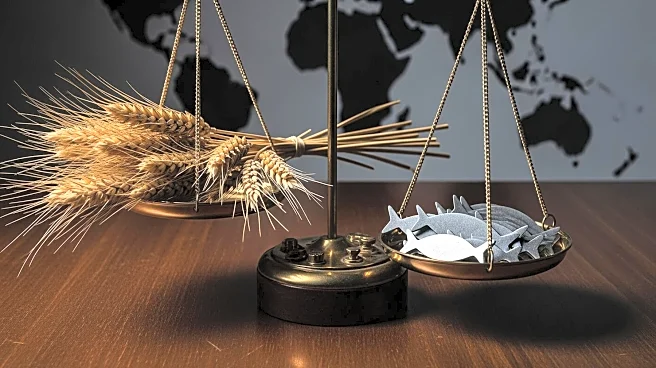
been weakened by geopolitical tensions, stalled negotiations, and increasing protectionism. A significant focus is on agriculture, where trade barriers have decreased, but disagreements persist, particularly regarding food sovereignty and public food stockpiles. Developing countries, including India, have expressed concerns over the impact of WTO rules on local agriculture, advocating for changes that align with food sovereignty principles. Additionally, the conference is revisiting a long-standing fisheries issue, seeking to expand a previous agreement to ban harmful subsidies that contribute to overfishing.
Why It's Important?
The outcomes of these discussions could have significant implications for global trade, particularly for developing countries that rely heavily on agriculture. The potential reforms could alter trade dynamics, affecting food security and economic stability in these regions. The debate over public food stockpiles highlights the tension between trade liberalization and national food security policies. Similarly, the fisheries discussions are crucial for sustainable fishing practices, which have long-term environmental and economic impacts. The inability to reach a consensus could perpetuate existing trade imbalances and environmental challenges, while successful negotiations could pave the way for more equitable and sustainable global trade practices.
What's Next?
The WTO aims to reach a consensus on a declaration concerning agriculture, trade, and global food security, setting the stage for future negotiations. The organization is also working towards finalizing the second portion of the fisheries agreement, with a deadline set for 2029. The outcomes of these negotiations will likely influence future WTO ministerial meetings and could lead to significant policy shifts. Stakeholders, including governments and international organizations, will be closely monitoring the developments, as the decisions made could impact global trade policies and environmental regulations.