


What's Happening?
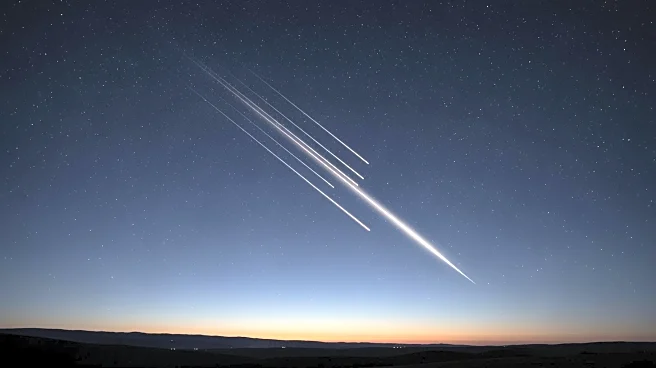
The Geminid Meteor Shower is set to peak on December 14, offering a spectacular display of over 100 meteors per hour. This annual event is widely regarded as the best meteor shower of the year due to its high meteor count and bright displays. The shower's
radiant is located near the star Castor in the constellation Gemini. Observers in North America are expected to have ideal viewing conditions, with the peak occurring around 3 a.m. Eastern time. The waning crescent moon will rise after the peak, minimizing its interference with the meteor visibility.
Why It's Important?
The Geminid Meteor Shower provides a unique opportunity for both amateur and professional astronomers to observe a high volume of meteors. This event is significant as it originates from the asteroid 3200 Phaethon, unlike most meteor showers that come from comets. The shower's visibility across the U.S. encourages public interest in astronomy and offers educational opportunities about celestial phenomena. The event also highlights the importance of preserving dark skies for astronomical observations, as light pollution can significantly impact the visibility of such natural spectacles.
What's Next?
As the Geminid Meteor Shower peaks, skywatchers are advised to find locations with minimal light pollution to fully enjoy the display. The event serves as a precursor to other astronomical events, such as the upcoming New Moon on December 19, which will provide optimal conditions for deep-sky observations. The public is encouraged to continue engaging with astronomy through local observatories and educational programs, fostering a deeper understanding of our universe.