





What's Happening?
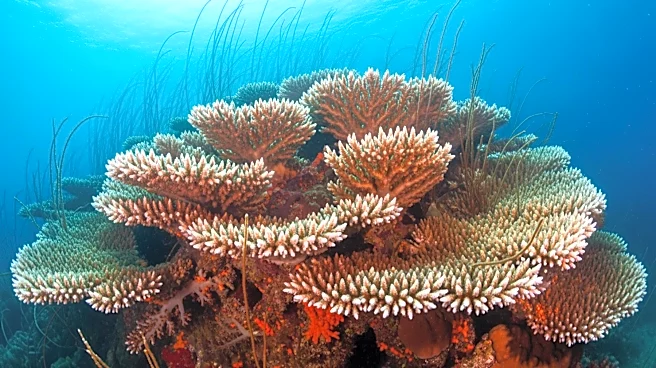
A team of scientists from NOAA has discovered a massive coral colony in the remote Maug Islands, identified as the largest Porites rus ever recorded. The coral, located within a submerged volcanic caldera in the Mariana archipelago, spans approximately
14,500 square feet and extends over 100 feet across the top. The colony's estimated age, based on average growth rates, suggests it could be over 2,050 years old. The discovery was made during the 2025 National Coral Reef Monitoring Program surveys, highlighting the coral's resilience amidst widespread reef decline. The site, known for its unique chemical conditions due to carbon dioxide vents, offers a natural laboratory for scientific research.
Why It's Important?
The discovery of this massive coral colony is significant for several reasons. It provides valuable insights into coral resilience and longevity, especially in the face of environmental changes. The coral's ability to thrive in localized acidic conditions created by carbon dioxide vents offers a unique opportunity to study marine ecosystems under stress. This research could inform conservation strategies for coral reefs globally, which are vital for marine biodiversity and coastal protection. Additionally, the site lies within the Mariana Trench Marine National Monument, emphasizing the importance of preserving unique ecosystems for ongoing scientific research.
What's Next?
Efforts are underway to give the coral formation a culturally appropriate name, involving input from Chamorro and Carolinian communities. This initiative aims to link scientific observation with local heritage, fostering community engagement in marine conservation. Further research is expected to continue at the site, exploring the coral's growth patterns and environmental interactions. The findings could contribute to broader discussions on marine conservation policies and the impact of climate change on oceanic ecosystems.
Beyond the Headlines
The discovery raises questions about the limits of current scientific methods for estimating coral age, as Porites rus does not produce clear growth bands. This highlights the need for developing more precise techniques to study ancient marine organisms. The coral's survival over centuries also prompts discussions on the historical changes in oceanic conditions and their impact on marine life. Understanding these dynamics could offer insights into the long-term effects of climate change on marine ecosystems.