



What's Happening?
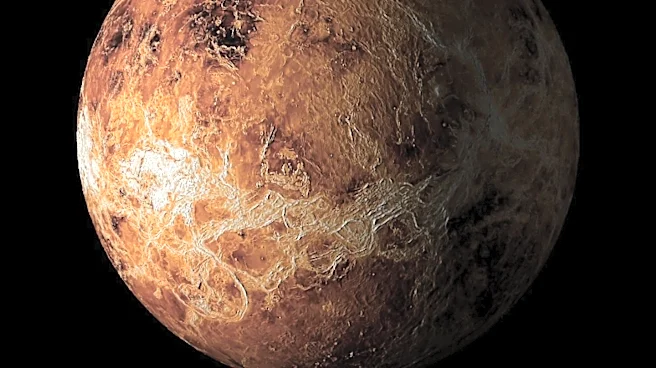
Years of follow-up observations have repeatedly recovered a candidate phosphine signal in Venus's clouds, making the initial 2020 detection harder to dismiss. Despite initial challenges and skepticism regarding the original data, reprocessed ALMA observations,
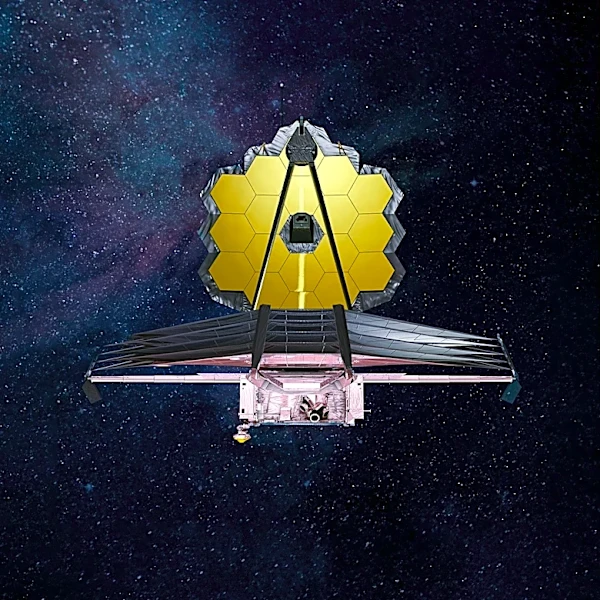
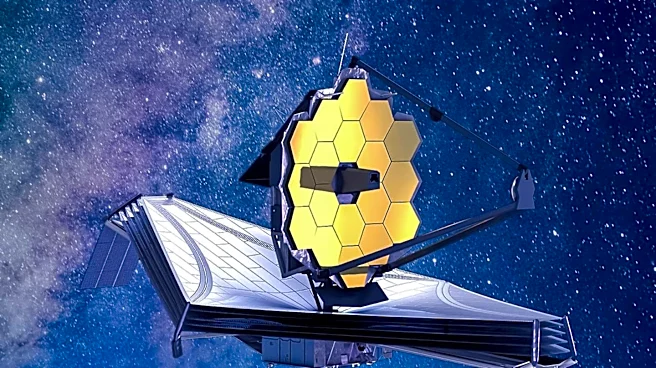
a reanalysis of SOFIA data, and a significantly larger monitoring program with the James Clerk Maxwell Telescope (JCMT-Venus) have all detected candidate signals. The JCMT-Venus program, with 140 times more data than the original discovery, recovered narrow phosphine and HDO lines, and an experimental technique even implied roughly 0.3 parts per million of phosphine near 55 kilometers altitude. While the signal's reality is becoming more robust, the scientific community remains cautious. The key questions revolve around whether the absorption feature is truly phosphine, and if so, whether its source is biological or abiotic. No known non-biological process has yet been demonstrated to produce the claimed amounts of phosphine in Venus's oxidizing environment.
Why It's Important?
The persistent detection of phosphine on Venus is significant because, on Earth, phosphine is primarily associated with biological activity or extreme industrial processes. Its presence in Venus's clouds, an environment considered hostile to life, raises profound questions about the possibility of extraterrestrial life or unknown abiotic chemical processes. If confirmed as phosphine and an abiotic source cannot be identified, it would be a strong indicator for potential life in Venus's atmosphere, fundamentally altering our understanding of planetary habitability. Conversely, if a novel abiotic mechanism is discovered, it would expand our knowledge of planetary chemistry and the conditions under which complex molecules can form. This ongoing scientific debate drives further exploration and research into Venus, pushing the boundaries of astrobiology and atmospheric science.
What's Next?
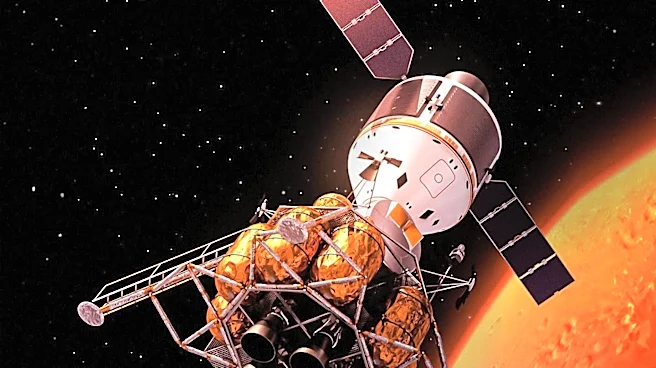
The scientific community needs to conduct further independent confirmations of the phosphine signal, ideally using different telescopes and analytical methods to reduce potential instrumental biases. A crucial next step is to find other phosphine transitions at mutually consistent abundances. Researchers are also focused on identifying a plausible abiotic mechanism for phosphine production in Venus's atmosphere, with cloud-particle photochemistry being an open possibility requiring laboratory work. Ultimately, a descent probe to Venus would provide the most definitive answers. Such a probe could sample gases at known altitudes, measure various phosphorus-bearing compounds, and assess the acidity, water content, and surrounding chemistry directly, allowing for a more conclusive interpretation of any phosphine detected. This would move beyond remote spectral analysis to in-situ measurements.
Beyond the Headlines
The Venus phosphine debate highlights the rigorous and often contentious nature of scientific discovery, especially when it touches upon the profound question of life beyond Earth. It underscores the importance of independent verification, transparent data analysis, and the continuous challenge of ruling out all known abiotic explanations before considering biological ones. The controversy also serves as a powerful motivator for technological advancement in space exploration, emphasizing the need for more sophisticated instruments and direct sampling missions to resolve such complex scientific puzzles. Philosophically, if life were indeed found in Venus's clouds, it would suggest that life is far more adaptable and widespread than previously imagined, potentially thriving in environments vastly different from Earth's, thereby expanding the search for life to a broader range of exoplanetary conditions.