








What's Happening?
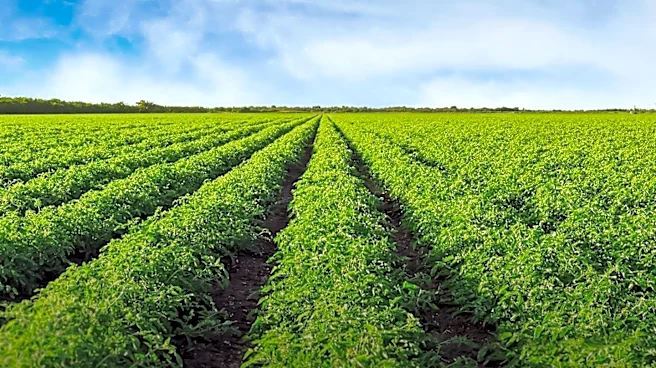
The Conservation Action Project (CAP), supported by H2Ohio funding, is conducting field research across seven Ohio counties to improve soil health and reduce farmers' reliance on commercial fertilizers. Alan Sundermeier, who leads CAP's research efforts,
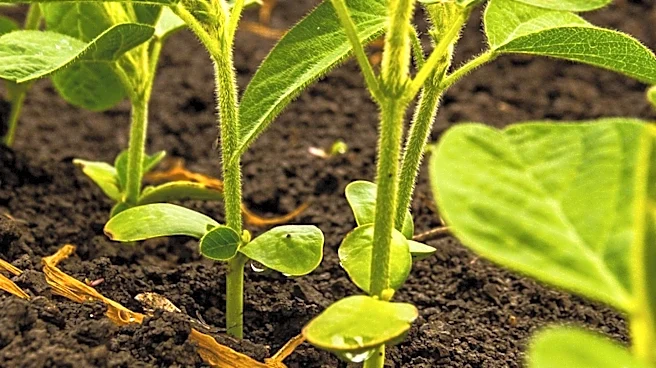
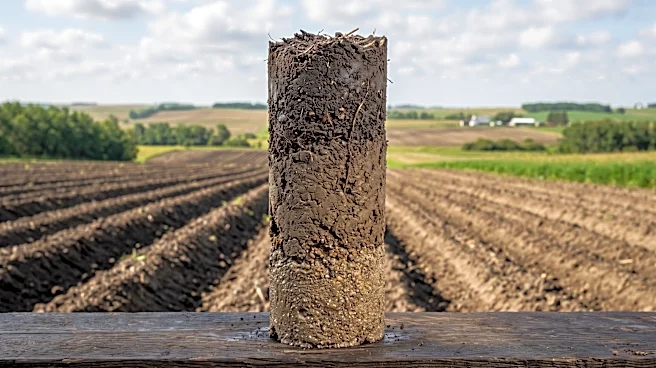
stated that the goal is to demonstrate the economic viability of soil health practices for farmers facing tightening profit margins and rising input costs. One ongoing five-year study compares crop yields with and without phosphorus fertilizer applications, showing no yield disadvantage from withholding phosphorus so far. CAP is also investigating methods to reduce nitrogen fertilizer use in corn production, including the use of cover crops like legumes. Some trials have shown a 30-pound reduction in nitrogen without negative impacts on yields or farm economics. The project also explores 'planting green,' where corn is planted directly into living cover crops, and utilizes advanced soil-testing methods like Solvita, POXC, and the Haney soil health test to provide farmers with more comprehensive information.
Why It's Important?
This research is crucial for the economic sustainability of U.S. agriculture, particularly for farmers in Ohio. By identifying practices that reduce fertilizer expenses while maintaining or improving soil productivity, CAP aims to lower operational costs for farmers, thereby improving their profit margins. The findings could lead to widespread adoption of conservation practices, which not only benefit individual farm economics but also contribute to broader environmental goals, such as improving water quality by reducing nutrient runoff. The emphasis on demonstrating economic benefits alongside environmental ones is key to encouraging farmers to adopt new, potentially risky, practices. Furthermore, involving younger generations in these innovative approaches is vital for the long-term future of agriculture, ensuring a reliable food supply and sustainable land management.
What's Next?
The research conducted by the Conservation Action Project is ongoing, with more data needed to draw firm conclusions regarding the long-term reduction of fertilizer use. Sundermeier believes that demonstrating successful practices on working farms is the most effective way to encourage wider adoption among the agricultural community. Future steps will likely involve continued data collection, analysis, and dissemination of findings to farmers through educational efforts, supported by grants from organizations like the USDA and The Nature Conservancy, and industry partners such as Cargill. The project also aims to encourage farm families to empower younger producers to experiment with new practices and participate in farm management decisions, fostering innovation and sustainability for future generations in agriculture.
Beyond the Headlines
Beyond the immediate economic and environmental benefits, CAP's work highlights a significant shift in agricultural philosophy towards a more holistic and sustainable approach. The project underscores the interconnectedness of soil health, farm profitability, and environmental protection. By focusing on practices that enhance natural soil processes and reduce external inputs, it addresses the ethical responsibility of land stewardship and the long-term viability of agricultural ecosystems. The use of advanced soil testing methods also signifies a move towards more data-driven and precise farming, potentially leading to a more resilient and adaptable agricultural sector in the face of climate change and evolving market demands. This initiative could serve as a model for other regions grappling with similar challenges in balancing agricultural productivity with environmental conservation.