







What's Happening?
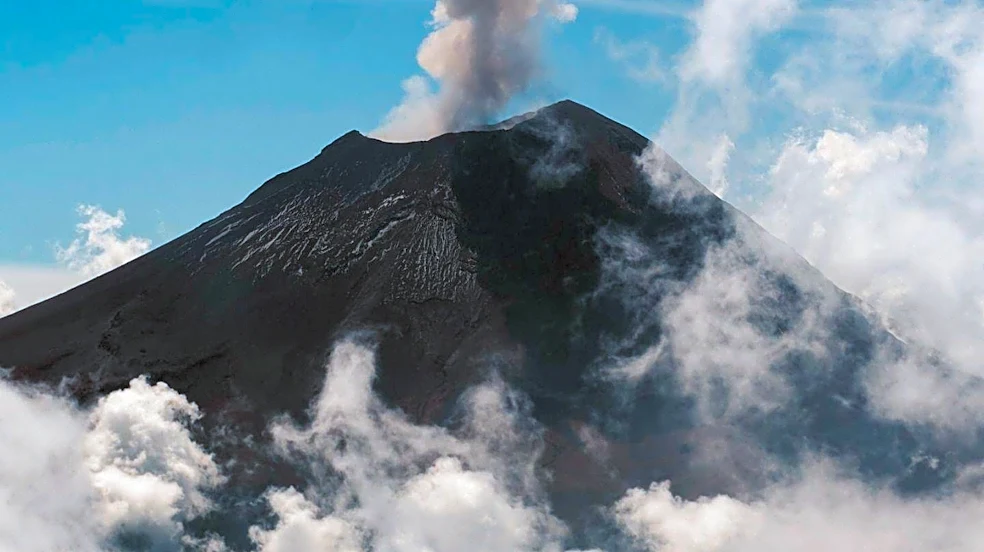
Volcanic ash, composed of pulverized rock and volcanic glass rich in silica, presents a severe danger to jet aircraft. When ingested into a jet engine, the ash melts due to the high combustion temperatures and then resolidifies on cooler turbine blades.
This process creates a hard coating that restricts airflow and plugs cooling holes, leading to a loss of thrust and potential engine failure. Historically, incidents like the 1982 British Airways flight over Mount Galunggung and the 1989 KLM flight near Mount Redoubt demonstrated this repeatable physical process, where both aircraft lost all engines after encountering ash clouds. The 2010 eruption of Iceland's Eyjafjallajökull further highlighted the logistical challenges, grounding approximately 100,000 flights and costing airlines over a billion dollars. This event prompted regulators to shift from blanket airspace closures to tiered, concentration-based rules and spurred advancements in dispersion models to predict ash plume movements. The global network of nine Volcanic Ash Advisory Centers (VAACs) tracks eruptions and provides forecasts, though these are based on partial data. Eruptions in sparsely populated areas, such as Russia's Kamchatka Peninsula or the Aleutians, can push ash into busy trans-Pacific flight corridors hours before ground observation, making satellite imagery crucial for early detection.
Why It's Important?
The threat of volcanic ash to aviation has profound implications for global air travel, safety, and the economy. The unique composition of volcanic ash, which behaves like ground glass mixed with cement inside a jet engine, can cause catastrophic engine failure, posing an immediate and severe risk to passenger and crew safety. The economic impact of volcanic eruptions on the aviation industry is substantial, as evidenced by the 2010 Eyjafjallajökull eruption, which resulted in over a billion dollars in lost revenue for airlines due to widespread flight cancellations and delays. This financial burden affects airlines, travel-related businesses, and passengers globally. Furthermore, the need for rerouting flights around ash clouds increases fuel consumption and flight times, contributing to higher operational costs and potential environmental impacts. The reliance on satellite imagery for early warnings in remote regions underscores the importance of continuous technological advancements in monitoring and forecasting volcanic activity. The ongoing risk necessitates robust international cooperation among aviation authorities, meteorological organizations, and volcanological observatories to ensure timely and accurate information dissemination, which is critical for mitigating risks and maintaining the safety and efficiency of air travel.
What's Next?
The aviation industry and scientific community will continue to focus on enhancing volcanic ash detection and forecasting capabilities. The development and wider adoption of infrared ash detectors designed for aircraft, which provide real-time, forward-looking warnings, could significantly improve in-flight safety. Further refinement of dispersion models used by Volcanic Ash Advisory Centers (VAACs) will be crucial for more accurate predictions of ash plume trajectories, allowing for more precise and less disruptive rerouting decisions. Ongoing monitoring of active volcanoes, particularly those near busy air corridors like the Aleutians and Russia's Kamchatka Peninsula, will remain a priority. International collaboration and data sharing among VAACs and other relevant organizations will be essential to ensure a coordinated global response to volcanic ash events. Airlines will likely continue to prioritize rerouting flights to avoid ash, as the cost of flying through it, including potential engine damage and safety risks, far outweighs the cost of detours. This proactive approach will help minimize disruptions and maintain safety standards in the face of unpredictable volcanic activity.
Beyond the Headlines
Beyond the immediate concerns of flight safety and economic disruption, the persistent threat of volcanic ash highlights a broader challenge in managing natural hazards in an increasingly interconnected world. The reliance on satellite imagery for early detection in remote areas underscores the critical role of space-based observation technologies in global safety infrastructure. This also brings to light the ethical considerations surrounding risk assessment and decision-making in aviation, where the balance between economic efficiency and passenger safety is constantly weighed. The evolution of regulatory frameworks, moving from blanket airspace closures to concentration-based rules, reflects a growing sophistication in understanding and mitigating complex natural phenomena. This shift also points to the ongoing scientific endeavor to better understand volcanic processes and their atmospheric impacts. Furthermore, the disruption caused by volcanic ash can have ripple effects on global supply chains, tourism, and international relations, demonstrating how localized geological events can have far-reaching geopolitical and economic consequences. The continuous adaptation of technology and policy in response to volcanic threats serves as a model for addressing other global environmental challenges.