









What's Happening?
Scientists at Albert Einstein College of Medicine, in collaboration with Institut Pasteur and LSU Health Shreveport, have revealed how the deadly Andes hantavirus attaches to human cells. Their findings, published in Nature, detail the interaction between
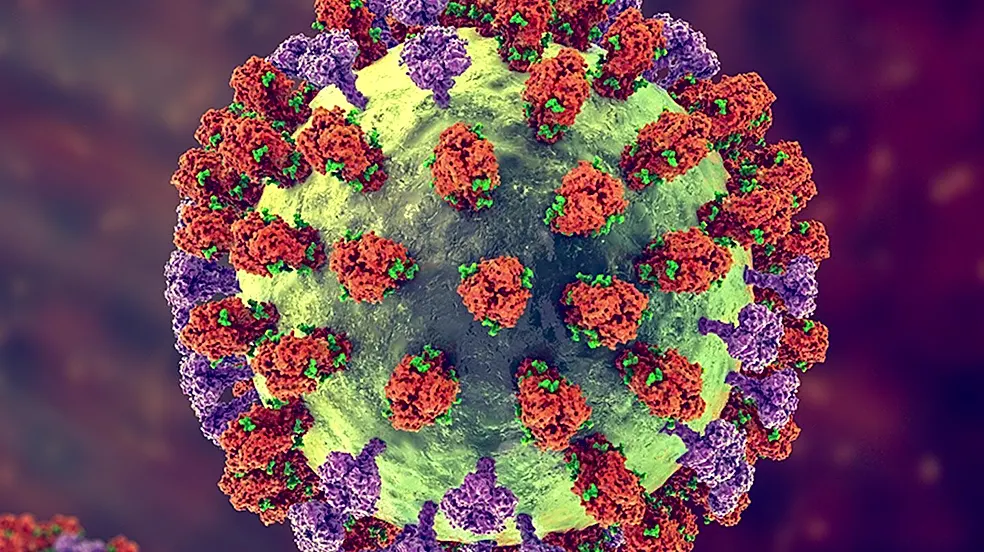
the virus's spike protein and the human cell receptor PCDH1. Unlike many viruses, the Andes virus requires its entire square-shaped spike, composed of four identical protein units, to bind to PCDH1. Using cryo-electron microscopy and an AI-designed scaffold, the researchers visualized this interaction, discovering that a single PCDH1 molecule embeds into a deep pocket within the virus's spike. This discovery sheds light on how the virus captures its receptor and how it evades antibodies, as the pocket's depth restricts antibody access.
Why It's Important?
This discovery is critically important for public health, particularly given the lack of approved vaccines or treatments for Andes hantavirus, which is the only hantavirus known to spread from person to person. Understanding the precise mechanism of viral attachment provides a clear target for developing new antiviral therapies. By identifying the specific pocket where PCDH1 binds, scientists can now design molecules that block this interaction, preventing the virus from entering human cells and multiplying. This could lead to effective treatments for Andes virus and other hantaviruses, which cause severe and often fatal diseases like hantavirus pulmonary syndrome. The insights into how the virus evades antibodies also inform strategies for developing more robust and broadly protective vaccines.
What's Next?
The immediate next step is to exploit the identified vulnerability in the Andes hantavirus. Researchers can now focus on designing 'long and skinny' molecules that can fit into the deep receptor-binding pocket of the virus's spike protein, effectively blocking PCDH1 from attaching. This approach offers a blueprint for the development of new antiviral medicines. The insights gained from this study could also be applied to its close relative in the U.S. and Canada, the Sin Nombre virus, potentially leading to broader protective strategies against these high-consequence pathogens. Further research will likely involve screening and developing compounds that specifically target this binding mechanism, with the ultimate goal of bringing new treatments to clinical trials.
Beyond the Headlines
This research highlights the power of advanced imaging techniques like cryo-electron microscopy and the growing role of artificial intelligence in biological discovery. The use of an AI-designed scaffold was instrumental in stabilizing the viral spike for structural analysis, demonstrating how computational tools are accelerating fundamental scientific understanding. The findings also underscore the evolutionary arms race between viruses and their hosts, revealing sophisticated viral strategies for infection and immune evasion. Ethically, the development of new antivirals for emerging and re-emerging infectious diseases is a global health priority, and this research contributes significantly to that effort. The long-term impact could be a more proactive approach to pandemic preparedness, with a deeper understanding of viral mechanisms enabling faster development of countermeasures.