
What's Happening?
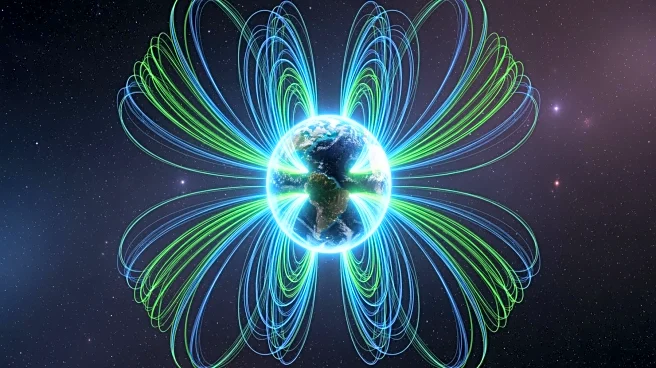
The European Space Agency (ESA) has released an audio interpretation of Earth's magnetic field reversal that occurred approximately 41,000 years ago. This event, known as the Laschamps event, was characterized
by a dramatic weakening of the magnetic field to just 5% of its current strength, allowing an increased influx of cosmic rays into Earth's atmosphere. The ESA's Swarm satellite mission collected data that geoscientists used to map the event, translating it into an eerie soundscape. This audio representation was developed by combining satellite data with evidence of magnetic field line movements on Earth, resulting in a unique auditory experience that mimics natural sounds like creaking wood and crashing rocks. The Laschamps event left a significant isotopic signature in ice and marine sediments, indicating a higher-than-normal solar bombardment, which may have contributed to climate changes and the extinction of Australia's megafauna.
Why It's Important?
Understanding the Laschamps event and similar magnetic field reversals is crucial for predicting future space climate conditions and assessing their potential impacts on the environment and human society. The weakening of Earth's magnetic field during such events can lead to increased exposure to cosmic radiation, which poses risks to satellites and other space-based technologies. Additionally, these events can have profound effects on Earth's climate and ecosystems, as evidenced by historical changes in megafauna populations and human behavior. The ESA's research provides valuable insights into the dynamics of Earth's geomagnetic field, helping scientists anticipate and mitigate the effects of future magnetic anomalies.
What's Next?
While recent anomalies in Earth's magnetic field, such as the weakening over the Atlantic Ocean, have raised concerns about a potential impending reversal, current research suggests these anomalies are not directly linked to flipping events. However, the South Atlantic anomaly continues to expose satellites to higher levels of radiation, underscoring the need for ongoing monitoring and research. The ESA's Swarm constellation will continue to measure magnetic signals from various Earth layers to enhance understanding of geomagnetic fluctuations and improve predictive models. This ongoing research is vital for preparing for any future magnetic field reversals and their potential impacts on technology and the environment.
Beyond the Headlines
The study of Earth's magnetic field reversals also touches on broader scientific and philosophical questions about the planet's history and the forces shaping its future. The ability to 'hear' a magnetic field reversal offers a novel way to engage the public with complex scientific phenomena, potentially inspiring greater interest in geosciences and space research. Furthermore, understanding these events contributes to a deeper comprehension of Earth's place in the solar system and the broader universe, highlighting the interconnectedness of cosmic and terrestrial processes.