







What's Happening?
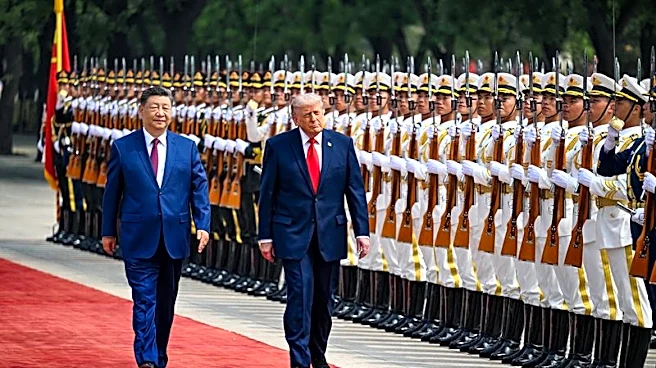
As President Donald Trump engages in discussions with Chinese President Xi Jinping, U.S. lawmakers are expressing concerns about the potential impact of allowing Chinese automakers into the U.S. market. Despite Trump's earlier suggestion of welcoming
Chinese manufacturers if they produce vehicles domestically, lawmakers from auto-heavy states like Michigan and Ohio warn that such a move could threaten domestic jobs and industries. Chinese automakers currently face significant tariffs and barriers in the U.S., but their existing involvement in the U.S. auto supply chain complicates the situation. Over 60 U.S.-based auto suppliers are owned by Chinese companies, and many vehicles sold in the U.S. contain Chinese parts.
Why It's Important?
The potential entry of Chinese automakers into the U.S. market is a contentious issue due to its implications for domestic manufacturing and employment. Lawmakers fear that heavily subsidized Chinese companies could undermine U.S. automakers, leading to job losses in key battleground states. This issue is politically sensitive, especially with upcoming elections, as it touches on economic nationalism and the protection of critical industries. The debate also highlights the complexities of global supply chains, where Chinese components are already integral to many U.S. vehicles, raising questions about national security and economic independence.
What's Next?
The U.S. administration will need to carefully consider the political and economic ramifications of any deal with China regarding the auto industry. Lawmakers and industry groups are likely to continue lobbying against opening the market to Chinese automakers, emphasizing the need to protect domestic jobs and industries. The outcome of these discussions could influence U.S.-China trade relations and set precedents for future economic policies. Additionally, automakers may need to reassess their supply chains and sourcing strategies in response to geopolitical tensions and regulatory changes.