





What's Happening?
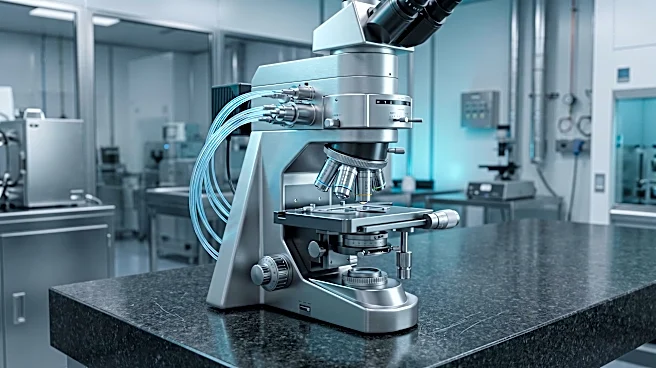
Researchers have developed a quantum version of the Differential Interference Contrast (DIC) microscope, known as qDIC, which demonstrates enhanced resilience to environmental disturbances compared to its classical counterpart. Traditional DIC microscopy,
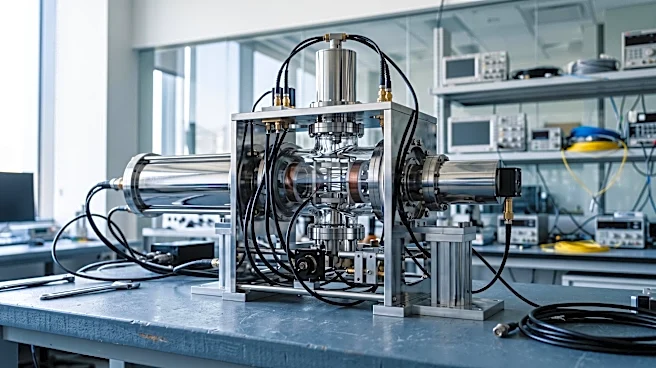
a label-free optical imaging technique, translates phase shifts into intensity measurements to visualize transparent biological and material specimens. However, its precision is often degraded by random phase noise caused by environmental factors like acoustic vibrations, air currents, and temperature shifts. The qDIC microscope utilizes quantum interference for polarization analysis, offering a quantum-enhanced sensitivity advantage. While classical systems can achieve better sensitivity in ideal, disturbance-free conditions, the qDIC proves more robust in the presence of random phase noise. This improved resilience is attributed to the use of quantum interference between single photons, which provides better sensitivity than classical coherence between optical beams under conditions of loss and random phase noise. The experimental setup involves a continuous-wave laser pumping a nonlinear crystal to produce signal/idler photon pairs, which are then collected into single-mode fibers.
Why It's Important?
This development holds significant implications for various scientific and industrial fields in the U.S. and globally, particularly in biological and materials science. The enhanced resilience of qDIC to environmental noise means that highly precise imaging can be conducted in less controlled environments, potentially reducing the need for expensive and complex phase stabilization systems. This could democratize access to high-resolution microscopy, enabling more widespread research and development in areas such as nanotechnology, cell biology, and medical diagnostics. Industries involved in manufacturing sensitive materials or conducting biological research could benefit from more reliable and accurate imaging data, leading to faster innovation cycles and improved product quality. The ability to measure ultra-small phase shifts with greater stability could also advance the understanding of nanoscale structures and processes, which is crucial for developing next-generation technologies and treatments. This quantum-enhanced approach could lead to breakthroughs in areas where environmental disturbances have previously limited the accuracy of optical measurements.
What's Next?
The next steps for qDIC technology will likely involve further refinement and miniaturization of the experimental setup to make it more practical for broader application. Researchers will aim to optimize the system's performance in diverse real-world conditions and explore its integration into existing microscopy platforms. Commercialization efforts could follow, with a focus on developing user-friendly qDIC microscopes for research institutions, pharmaceutical companies, and advanced materials manufacturers. Additionally, further studies will be needed to fully characterize the quantum advantage across a wider range of sample types and environmental challenges. The development of standardized protocols for qDIC operation and data analysis will also be crucial for its widespread adoption. This technology could also inspire the creation of other quantum-enhanced sensing and imaging devices, pushing the boundaries of what is currently measurable and observable.
Beyond the Headlines
The emergence of qDIC highlights a broader trend in scientific instrumentation: the leveraging of quantum phenomena to overcome classical limitations. This shift towards quantum sensing and imaging signifies a fundamental change in how precision measurements are approached, moving beyond simply improving classical techniques. The enhanced resilience to noise offered by qDIC underscores the inherent advantages of quantum mechanics in dealing with environmental decoherence, a major challenge in many sensitive measurements. This development could also spark ethical discussions regarding the accessibility and equitable distribution of advanced quantum technologies, ensuring that their benefits are not confined to a select few. Furthermore, it could influence educational curricula, necessitating a greater emphasis on quantum physics and its practical applications to prepare the next generation of scientists and engineers for this evolving technological landscape. The success of qDIC could serve as a blueprint for applying quantum principles to solve other long-standing measurement problems in science and engineering.