

What's Happening?
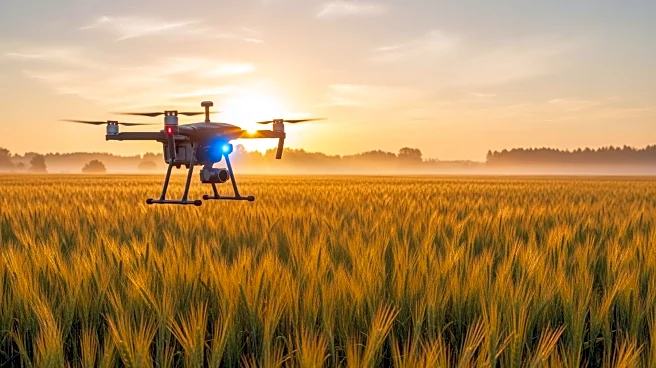
A new initiative at Penn State University is training a select group of researchers to utilize artificial intelligence (AI) in agriculture, specifically targeting tree fruit farming. This three-year program, supported by over $738,000 in funding from
government and university sources, aims to equip doctoral fellows with the skills to apply AI and precision tools to address real-world agricultural challenges. The program is led by associate professor Long He, who emphasizes the importance of AI in improving farming practices and adapting to climate change. The initiative also seeks to foster collaboration between academia, industry, and farmers, with the goal of producing leaders in climate-smart agriculture.
Why It's Important?
The deployment of AI in agriculture is significant as it offers potential solutions to pressing issues such as crop diseases, pests, and the impacts of climate change. By enhancing the efficiency and effectiveness of farming practices, AI can help ensure food security and sustainability. However, the increased use of AI also raises concerns about energy consumption and environmental impact, as data centers require substantial electricity and water resources. Balancing the benefits of AI with its environmental footprint is crucial, and the program at Penn State aims to address these challenges by promoting the use of renewable energy sources.
What's Next?
As the program progresses, the trained researchers are expected to become leaders in the field, driving innovation in agriculture and contributing to the development of sustainable farming practices. The initiative may also influence policy decisions and encourage further investment in AI technologies for agriculture. Additionally, the collaboration between different sectors could lead to new partnerships and advancements in agricultural research and technology.