







What's Happening?
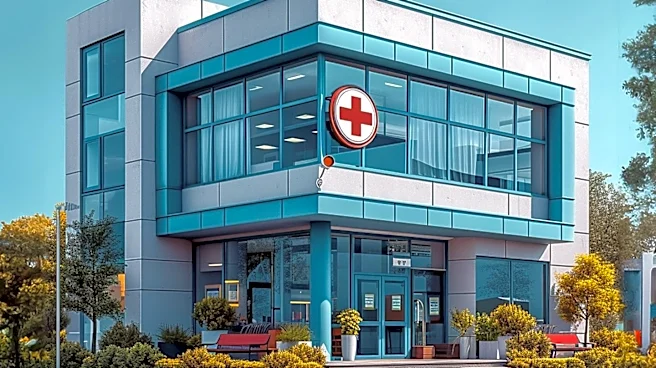
Harbor Community Health Centers are adopting a comprehensive approach to healthcare by integrating medical, dental, and behavioral health services within a single facility. This model aims to simplify healthcare access for individuals and families by eliminating
the need to visit multiple providers at different locations. The centers offer a wide range of services, including pediatric care, women's and men's health and wellness, prenatal care, and senior care. Dental services encompass routine exams, fluoride treatments, fillings, extractions, and dentures, emphasizing the link between oral health and overall well-being. Additionally, behavioral health services, such as mental health screenings, therapy, and support for substance use disorders, are provided for all ages, including individual, family, and group counseling. This integrated approach is designed to foster long-term patient-provider relationships and facilitate early detection of health issues.
Why It's Important?
The integration of medical, dental, and behavioral health services under one roof is a significant development in U.S. healthcare, particularly for community health. This model addresses a critical barrier to care: the fragmentation of services, which often leads to missed appointments, delayed diagnoses, and poorer health outcomes. By streamlining access, Harbor Community Health Centers make it easier for patients to manage their health holistically, recognizing that physical, oral, and mental health are interconnected. This approach is especially beneficial for underserved populations who may face challenges with transportation, time off work, or navigating complex healthcare systems. The emphasis on long-term relationships and comprehensive care can lead to more proactive health management, reduced emergency room visits, and ultimately, a healthier community.
What's Next?
The success of Harbor Community Health Centers' integrated model could influence other healthcare providers and policymakers to adopt similar strategies. If this model proves effective in improving patient engagement, health outcomes, and cost-efficiency, it may become a benchmark for community health centers nationwide. There could be increased advocacy for funding and policy changes that support integrated care models, potentially leading to broader implementation. The centers will likely continue to expand their services based on community needs, further solidifying their role as central healthcare hubs. This approach also encourages a shift in patient perception, moving towards viewing health as a unified concept rather than a collection of separate issues.
Beyond the Headlines
This integrated care model touches upon deeper issues within the U.S. healthcare system, particularly the historical separation of physical and mental health, and the often-overlooked importance of oral health. By bringing these elements together, Harbor Community Health Centers are challenging conventional silos and promoting a more patient-centered philosophy. This approach has ethical implications, as it ensures that comprehensive care is accessible to all, regardless of their ability to pay, aligning with principles of health equity. Culturally, it fosters a more trusting and inclusive environment where patients feel seen and supported in all aspects of their well-being, potentially reducing stigma associated with mental health and dental care. The long-term societal impact could be a healthier, more resilient population with better access to preventive and ongoing care.