






What's Happening?
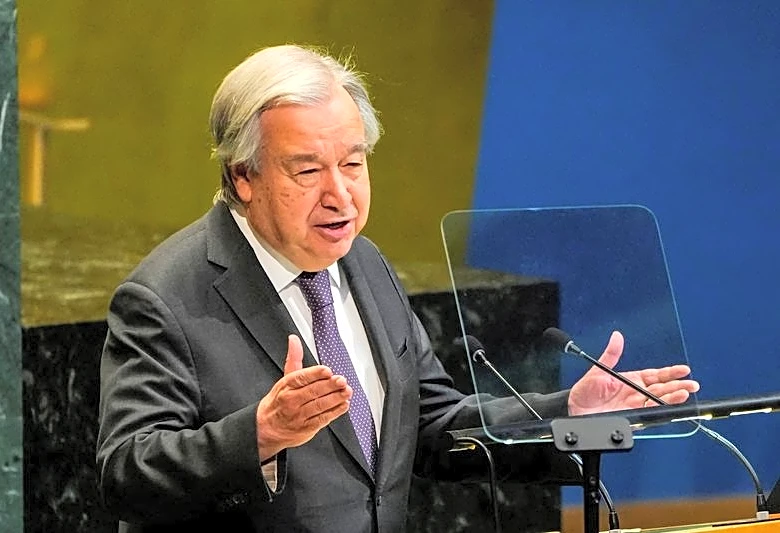
UN Secretary-General António Guterres has proposed the establishment of a new force to replace the United Nations Interim Force in Lebanon (UNIFIL), which has been maintaining a buffer presence in southern Lebanon since 1978. This proposal comes in response
to the UN Security Council's decision to terminate UNIFIL by the end of 2026. The new force would aim to ensure the ceasefire between Hezbollah and Israel is maintained. Guterres outlined three potential models for the new force, ranging from a robust deployment of 350 military observers supported by infantry battalions, to a lighter option with 215 unarmed observers. Each model includes various levels of monitoring and enforcement capabilities, with the most ambitious option allowing for comprehensive patrols and coordination with both the Lebanese Armed Forces and the Israel Defense Forces. The proposal highlights the need for substantial support assets, such as helicopters and surveillance systems, to effectively monitor the Blue Line, the de facto border between Lebanon and Israel.
Why It's Important?
The proposal to replace UNIFIL with a new force is significant as it addresses the longstanding challenges faced by the UN in maintaining peace and security in southern Lebanon. UNIFIL has been criticized for its inability to fully implement its mandate, particularly in preventing Hezbollah's armed presence south of the Litani River. The new force aims to enhance monitoring and enforcement capabilities, potentially leading to a more stable and secure environment in the region. This development is crucial for regional stability, as tensions between Hezbollah and Israel have historically led to conflict. The proposal also reflects the UN's commitment to adapting its peacekeeping efforts to better address the realities on the ground, which could influence future peacekeeping missions globally.
What's Next?
The UN Security Council will need to review and decide on the proposed models for the new force. This decision will involve negotiations among member states, particularly those with vested interests in the region. The outcome will determine the future of international peacekeeping efforts in southern Lebanon. If approved, the new force would require significant logistical and financial support to be effective. The transition from UNIFIL to the new force will also need to be carefully managed to avoid any security vacuum that could be exploited by hostile forces. The international community, including key stakeholders like Israel and Lebanon, will likely play a role in shaping the final structure and mandate of the new force.
Beyond the Headlines
The proposal to replace UNIFIL with a new force raises questions about the effectiveness of international peacekeeping missions and the challenges they face in conflict zones. The inability of UNIFIL to fully implement its mandate highlights the limitations of traditional peacekeeping approaches in complex geopolitical environments. This situation underscores the need for innovative strategies and enhanced capabilities, such as advanced surveillance and rapid response mechanisms, to address modern security threats. The proposal also reflects broader debates within the UN about the future of peacekeeping and the need to adapt to changing global dynamics.